
Season 2 · Episode 17 · September 23, 2026 · 19 min
Just an Ordinary Tuesday
New episodes and essays land in my Tuesday letter, along with the Resource Library. Free, and leaving is easy.
Show notes
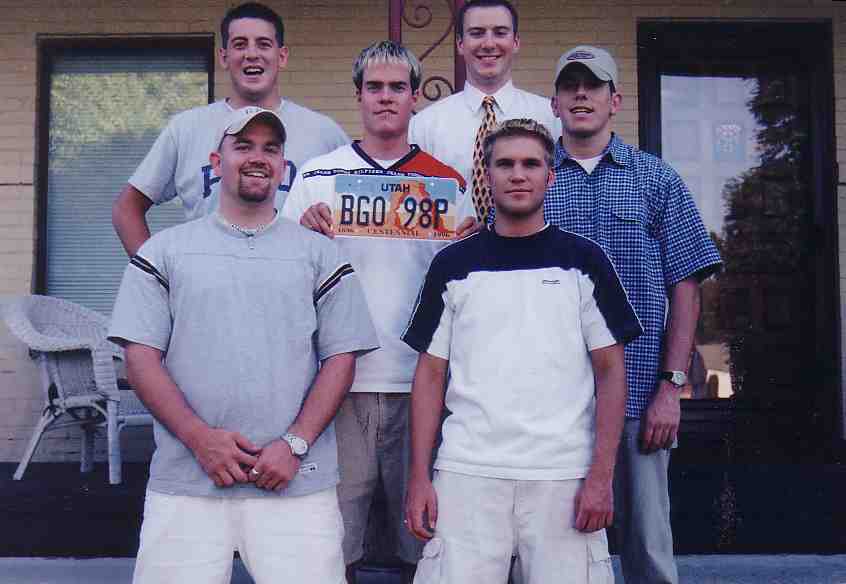
A good friend used to say, “Wherever you go, there you are,” when we were in high school. It was funny. The voice mattered. The people mattered. At the time, I had no idea I would eventually turn it into a podcast episode and a lengthy discussion about personal growth. I suspect the guys who knew me then will have opinions about this development.
So, before we get too far, a shout-out to the guys from BGO: Dan, Dave, Mike Ramsey, Matt, Mike, and Alex. You lived this phrase. You know the full story, and you know the actual voice that says it. There is a decent chance you heard that voice before you finished reading the title. More than thirty years later, I love that we still share that.
For everyone else, some explanation will have to remain with the people who were there. The part I want to talk about started recently, when I saw those words as the title of an episode of Lucky on Apple TV. It reminded me of my friend, then got me thinking about something I hadn’t considered much in high school.
Wherever I go, I’m going to be there. How much say do I still have in what it’s like when I arrive?
At fifty, I have considerable experience being myself. Kellie has been married to me for nearly twenty-seven years, which means she has considerable experience too, along with information I might leave out of the introduction. Our three kids have their own accounts. So do the people I work with. Somewhere in all those perspectives is a more complete understanding of me than the one I’m able to produce on my own.
That feels worth paying attention to, especially at an age when “I know myself” starts sounding like a reasonable way to end a discussion.
I know that I care about people. I also know that caring doesn’t guarantee I’m easy to talk to in every moment. Being able to explain why I did something doesn’t tell me everything about what it was like for the person dealing with it.
Think about how quickly an ordinary conversation grows larger than anyone intended. Somebody says you weren’t listening. You were listening, you explain. You remember most of what they said. You had something else on your mind, and they know how much you’re dealing with. Eventually, you’re explaining how deeply you care about them while they’re wondering whether you heard their original question.
The conversation has become exhausting, and nobody has even decided what’s for dinner.
I recognize the temptation to explain. From inside your own head, your behavior comes with reasons. You know what distracted you. You remember the other responsibilities you were trying to manage. The person across from you experienced the part where you looked at your phone while they were talking.
Your explanation might be accurate. Their experience still deserves your attention.
This is where “That’s how I am” becomes interesting. It sounds like self-knowledge, and sometimes it is. Understanding yourself helps you make better decisions. But the same sentence also offers a very convenient way to avoid trying anything unfamiliar.
How long do you have to do something before you decide it’s permanent? At what point does a habit become so familiar that questioning it feels like questioning your entire personality?
I’ve talked before about needing systems because my brain doesn’t reliably deliver the right detail at the right time. A responsibility deserves somewhere more dependable to live than my confidence that I’ll remember it later. Understanding that about myself has been useful.
Kellie still shouldn’t have to become responsible for everything I forget.
A shared calendar helps. Checking it is my job. Writing something down is an ordinary way to support the kind of husband I want to be. I remain myself throughout this process. Nobody is asking me to develop a completely different brain by Thursday.
The explanation becomes useful when it helps me do something. If I keep offering the same explanation while someone else keeps dealing with the same result, there’s more work to do.
That applies to qualities we like about ourselves too. Dependability is a good example. Being the person others count on feels good. You want to help, and you take their trust seriously. Then someone asks for one more thing, and you agree before checking whether there are enough hours available to do it.
Now another person is making plans around your answer. You already know the answer was optimistic.
Saying you need to check your schedule might feel uncomfortable, particularly if you’re used to being immediately helpful. It also gives the other person better information. They have a much better chance of making a workable plan with an honest answer than an enthusiastic promise you’re going to regret.
Being easygoing deserves a similar look. Are you comfortable with the plans, or are you agreeing because stating a preference feels awkward? Those lead to different evenings. The people around you have very little chance of understanding resentment about a decision you appeared perfectly happy to make.
Sometimes knowing yourself better begins with noticing what happens after you say yes.
Leading an organization gives me plenty to consider here. Experience matters. After years of making decisions, you develop judgment that is useful to other people. You also get a lot of practice explaining your reasoning, which creates its own temptation. An explanation that makes sense to me might still leave out something important to the person doing the work.
People ought to be able to tell me that without having to establish, first, that I’m a decent person with good intentions.
The people closest to me shouldn’t have to argue with my entire understanding of myself to tell me something I need to hear.
I want that to be true at work and at home. Someone who loves you might have noticed a pattern you’ve never thought much about. They’ve experienced you from a different position for years. Their account deserves a fair hearing, even if your first response is an extremely detailed explanation of why they’ve misunderstood.
There’s room for disagreement. Nobody gets everything right about another person. Boundaries matter, and some expectations are unreasonable. I’m talking about staying curious long enough to find out whether there’s something useful in what you’re hearing.
I also want to be clear about the limits of this conversation. Someone living with mistreatment deserves support and safety. An impossible workload needs more than an improved attitude. A phrase about taking responsibility shouldn’t become an excuse to tell people to tolerate circumstances that are hurting them.
For the ordinary habits within our control, though, getting specific makes change more manageable.
“Become a better listener” is an enormous assignment. Letting someone finish telling you about their day before introducing your own story is something you have an opportunity to practice tonight. You might even hear the part that explains why they wanted to tell you about it.
The first attempt might feel awkward. That’s reasonable. You’ve had years of practice with the familiar response. Trying another one deserves some patience before you decide it doesn’t suit you.
Other people deserve time too. If they’re used to you responding a certain way, one different conversation might surprise them. They don’t owe you an immediate announcement about your personal growth. They get to see whether the change continues. Keep practicing without making their reassurance part of the assignment.
All of this also needs a little proportion. You’re allowed to enjoy being yourself. An evening at home shouldn’t require a detailed review of your performance as a human being.
I’m fifty and still voluntarily stand in front of flying hockey pucks. I’m keeping that. Some decisions have already received sufficient discussion.
There are parts of who we’ve always been that deserve affection. An old friendship is one of them. A funny saying that still arrives in a particular voice is another. Growing older gives us more experience with those things and, I hope, a little more appreciation for them.
That’s what I liked about coming back to this phrase. It reminded me of people who knew me long before much of my adult life happened. Then it made me consider the people who know me now, and whether I’m giving them enough room to tell me something new.
To the BGO guys, thank you for a saying I still hear exactly the way you do. I realize I’ve now attached homework to it. Thirty-plus years ago, none of us asked for that.
For the rest of us, the homework is modest: choose one familiar response you want to handle differently next time. Give it an honest attempt. See what happens in the conversation.
That’s what I’m exploring in Season 2, Episode 17 of Still Here, Still Trying, “Wherever You Go, There You Are.” I’m glad these words found their way back into my attention. At fifty, I still have things to learn about being me, and people I care about who deserve to benefit from whatever I figure out.
Transcript
Read the full transcript
Auto-generated from the audio, lightly corrected. It may contain errors.
Welcome to Still Here, Still Trying with Mike Baker. I’m Mira, and I’m so glad you’re here. Today’s episode is called Wherever You Go, There You Are. A friend said that to Mike in high school. 30 plus years later, Mike has a response. I appreciate a man who takes a moment to gather his thoughts. Have you ever said that’s how I am? And hope that would end the discussion. Hmm, how’d that go? We’re looking at the habits we’ve had so long we’ve stopped questioning them.
You’ll leave with one small thing to try differently the next time a familiar habit gets in your way. And yes, Mike still plays goalie for fun. Apparently, personal growth includes deciding which things you’d like to keep doing in a helmet. Get comfortable. Here’s Mike.
And it was a funny saying back then. We’ve repeated it many times through our lives, but 30 plus years later, I saw it as an episode title while watching the show Lucky on Apple TV. And I just remembered him saying it, saying it. And now I’m wondering how much of what I call who I am is still open to change. I didn’t spend much time thinking about it back then. Look, you’re in high school, a friend says something funny, and you just remember it. But now I’m hearing those same words with 30 plus years of experience that I didn’t have at the time. And look, there’s just a lot more to consider with that very wise phrase. So thank you, Dan, for that.
Look, if you’ve been here before, welcome back. Uh, if this is your first time, I’m Mike Baker. This show is where I work through questions about being human, usually while still having plenty of work to do myself. Um today we’re looking at the explanations that we give for who we are and whether those explanations leave us any room to grow. I’m 50 now. Kellie and I have three kids. I lead a healthcare organization and I write books and make music and just share my thoughts with the world.
I do some advocacy work. I try really hard to be a good human being that’s trying to make the world a better place. There’s a lot about my life that the high school version of me just hadn’t lived yet when I first heard that phrase. And I think about how strange it would be to let that version of me make every decision about the person I’m allowed to become. We we do a version of that when we keep using an old description of ourselves without checking it.
At some point, somebody decided that we were the quiet one, or we became the person everyone depended on, and being needed started shaping how we understood our place in the family. Years later, even with different circumstances, we still use the same description. Some of those descriptions still fit, others deserve another look, and that’s the work that I want to do with you today. Okay, well, think about what happens when you decide something about yourself.
You say that you’re terrible at different difficult conversations, and there’s evidence. You’ve avoided a few, you’ve had others go badly. So this the description feels honest. But it also starts influencing what you expect from the next conversation before anyone has said a word. And that brings me back to, I think it was episode 35 when I talked about things that I’d stopped teaching, and one of them was follow your passion. I’d said it myself, and in that episode I questioned how helpful it was to s to someone who didn’t know what they loved yet.
I talked about curiosity and giving yourself time to get better at something before deciding what it meant to you. The same willingness to reconsider belongs here in this episode. Saying I’m terrible at difficult conversations gives you a reason to prepare for the one that you need to have this week. You might write down what you want to say or choose a time when you’re less rushed. Now used that way, uming yourself really helps, right? The trouble starts when the explanation becomes enough reason to keep postponing the conversation.
Take somebody who calls themselves easygoing, and that might be accurate. They don’t need every decision to go their way and they make room for other people, and that is truly a good quality. But imagine that person agreeing to plans that they resent because saying what they want feels uncomfortable. The people around them hear agreement, but later they’re surprised by the irritation. The useful question becomes very, very specific. Did I agree because I was comfortable with the plan?
Or what would happen if I answered honestly the next time? You learn more from looking at that exchange than from spending an afternoon arguing with yourself about whether you’re an easygoing person. I think that’s where these big identity questions become manageable. Look at something you actually do. Notice what happens before it and what follows. An explanation should help you understand your response well enough to make a choice about it. Otherwise, you’re left with a description and very little to do, right?
This applies to flattering descriptions too, right? Being dependable feels good. Other people trust you and you take that seriously. But if dependability starts requiring you to hide every limit that you have, eventually people are making plans with information that you’ve just left out. They think you’ve agreed to something manageable. You know you’ve agreed to more than you have time for, and that happens time and time again, right? There’s room to be dependable and honest about your capacity.
In fact, a clear answer about what you’re able to do gives people something more useful to work with. It’s more honest, it’s you. But the uncomfortable part is accepting that somebody might be disappointed. Oh no, I know how terrible that is, right? Oh, that actually kills me. But you have to decide whether preventing that feeling is worth making a promise that you’re going to struggle to keep, right? In episode 36, I spent time on what happens when life steadies and you still feel unsettled.
And that conversation belongs here because a change in circumstances give us some gives us something new to learn about ourselves. You get the breathing room that you wanted, and then you discover you haven’t figured out what to do with it. I understand the appeal of having something clear to solve. That is such a beautiful thing. Look, I lead Heritage Health and decisions are part of the job. A problem with a practical next step gives you somewhere to put your attention, right?
When you see it, you know where to go, it can be very clear. But there and and then there are people depending on the work and responding matters, and that part of being useful is real. But I want to be careful about how much authority we give that feeling outside the situation that requires it. Imagine an evening when nobody needs a decision from you. Can you imagine that? I hope you can. The work is done for the day as much as it ever is, and somebody you love is sitting nearby, and you’re checking your phone for something that would make you feel useful again.
You might put the phone down and find that the evening feels awkward for a few minutes, right? But there’s no task because there’s no task waiting for you. The conversation doesn’t need to produce anything. But just being there asks something different of you than solving a problem does. And it deserves a little time before you decide that you need something else to do. Savor those moments. That little bit of discomfort is worth noticing because you decide the evening needs fixing.
You might enjoy being busy, or there might be something that you need to talk about. But the point is to pay attention long enough to know instead of treating every unsettled feeling as an instruction to change your circumstances again. I also want to leave room for circumstances that absolutely need to change. A job that keeps taking more than you have to give deserves an honest assessment. A person living with mistreatment deserves support and safety.
We shouldn’t use a saying about personal responsibility to persuade somebody to remain somewhere that is harmful. There’s no wisdom in making every problem a failure to work on yourself. I think the question that I’m interested in is what you still have some say over, right? I mean, there’s some things you can control, you can decide. You might need a different job and a more honest way of discussing your limits. Both of those things deserve attention.
Finding a better situation gives you an opportunity to practice something that you had trouble doing before. You get to bring what you’ve learned into a place where it has more chance to work. Think about how we treat somebody learning a skill. We expect them to need repetition. That’s the only way to learn. So feedback gives them something to practice in the next attempt. Yet, with ordinary human behavior, we sometimes decide that awkwardness proves that we aren’t suited for it.
One uncomfortable attempt at asking for help becomes evidence that we should handle everything ourselves, right? I’d like us to be more patient with that first attempt, or the second attempt, or the third attempt. Somebody who has spent years answering immediately might need practice saying that they’ll check their schedule. That response might feel overly formal at first. It still gives them time to make an honest commitment, and it’s it takes just a step to do that.
Familiarity will come with you. So the more you do it, the better it’ll be. It doesn’t have to arrive before you begin. You can do that. Okay, well, now we’ve had that conversation. That all leads into what is it like to live with you? That was another episode that we did earlier. And in that episode, I asked us to look at what people experience around us because our intentions matter. The people closest to us also live with the consequences of our attention and our bad habits.
Knowing that you’re a caring person leaves you with a practical responsibility of making care part of their day. I talked about needing systems because my mind doesn’t arrange every responsibility neatly and produce it at the correct moment. It fails me all the time. I know what it feels like to have several thoughts moving at once and lose the one that is attached to something that I needed to remember, and it kills me when I do that. Understanding that about myself gives me information that I need to use.
Kellie shouldn’t have to become the solution to every detail that my brain loses. I love it when I get that help and she’s amazing at it, but it’s not her responsibility. So having a shared calendar helps because the information has somewhere to go. But checking it is still my responsibility. By doing that, I still remain the same person while doing something that just makes a shared life easier, and that’s better. There’s nothing dishonest about using a system to support the kind of husband that I want to be.
I don’t need to settle every thought that I have about my identity before I take responsibility for a commitment. And knowing that I lose track of details tells me where I need help from a system. And then the real challenge, I have to use it. I have to use it, and that’s really important. A very thoughtful explanation of my brain still won’t put the appointment on the calendar. I still have to get it to the calendar, I still have to check the calendar.
The harder moments come when somebody tells us something that we don’t enjoy hearing, and those are that’s always hard, right? Imagine being told that you interrupt. Hmm. Does that sound familiar? You think of yourself as engaged and interested, right? And you’re responding because you have something to add. From your side, the conversation feels lively. The other person is still trying to finish their thought. And it’s tempting to explain your enthusiasm.
That explanation might be completely accurate, but the next conversation still gives you a chance to wait just a little bit longer. You might discover that the other person says something that you would have missed. Your interest becomes more useful because you’ve given it time to take in the rest of what they were saying. And there is some humility involved in allowing another person’s experience to change your understanding of yourself. You know your intention from the inside, and they know what happened in the conversation and how it felt.
So seeing curious about their account gives you more information than defending your intention over and over. And if you do respond differently, just give that change some time. People who are used to an old response might be cautious. They have their own experience to make sense of. One good conversation doesn’t create an obligation for them to reassure you that about how much you’ve grown. It’s fun when people notice, but consistency gives them something to observe without requiring a verdict.
And the same care and focus belongs in the way we think about other people. If we want room to learn, we should be willing to notice when somebody handles something differently. And that doesn’t require ignoring what happened before or restoring trust before it feels warranted. It just asks us to look honestly at the present as well as the past. So here’s what I’d like you to do with this, because I always love leaving you with some homework. I love it even when you tell me that you did your homework, so great job.
Go check it out. But here’s the work for this week. Just choose one sentence that you use to explain yourself. Something along the lines of, I’ve always been this way. Pick a manageable behavior and then decide what you’ll do differently the next time that specific situation happens. For somebody like me who interrupts, it might be letting the other person just finish and asking a question before adding their own story. That little pause, that reflection, right?
If you agree to everything too quickly, the practice might be checking your calendar before answering. It’s really okay to do that. Choose the one that fits your life. One response is plenty to work on. There’s lots of overachievers that’ll pick ten and they’ll work on them this week, and that’s amazing. But just pick one. But be concrete enough that you’ll recognize the opportunity. So if you say I’m going to become a better listener, well, that leaves a lot of room for interpretation.
I think I’m a better listener, but I’m deaf and I can’t hear half the conversation. So I should probably get those hearing aids that Kellie’s been talking to me about, right? But knowing that you’re going to let your partner finish telling you about their day gives you something to do this evening, right? You can do that. You’ll know whether you did it, and you might also hear something that you didn’t expect. Keep the skill reasonable. A habit that you’ve practiced for years deserves more than one attempt.
You’ll probably mess it up the first time you try it. And when you miss the moment, just look at what happened. Perhaps you were trying to remember your own point and stopped listening, but that gives you something specific to work with next time. Calling yourself hopeless doesn’t tell you nearly as much. You also get to notice success without turning it into a declaration about the rest of your life. You listen differently in one conversation? Good, that’s great.
Let that experience count and let that teach you. See what made it possible and just try it again. Because over time you’ll have more than a hopeful description of the person that you want to be. You’ll have experiences that help you trust your ability to respond differently. And I want the permission in this episode to go both ways. There’s room to take responsibility and there’s room to stop treating yourself as a problem that requires constant correction.
Being quiet is fine. Enjoying a full life is fine too. The question is whether a particular response is costing you or somebody else something that you care about. And that’s just a useful place to put your attention. We’re allowed to have qualities that don’t need improving. And you don’t have to spend every evening reviewing your performance as a human being. This is one experiment with one familiar response. Just give yourself enough room to find out what happens when you do it differently.
Well, I hope you enjoyed this conversation. I like that this conversation started with something a friend said in high school. And then more than 30 years later, you know, we still remember it. It’s been part of our family sayings for years. But there are parts of who we were that we get to keep, including a funny saying and the person we associate it with. But growing older gives us a chance to decide what those things mean to us now. At fifty, I want to leave room for things that I haven’t learned yet.
There’s plenty of them out there. Kellie and our kids deserve that willingness from me, and so do the people that I work with. They ought to be able to tell me something about their experience without having to prove that my entire understanding of myself is wrong. I want to hear enough to do something useful with what they tell me. Wherever you go, there you are. You’ll be there for the next conversation with everything you’ve already lived and whatever you’re willing to learn.
Choose one familiar response you want to practice differently. You have a chance to make that next exchange just a little better for somebody you care about, including yourself. I’m Mike Baker, and this is Still Here, Still Trying. I’ll see you next week.
Watch the episode on YouTube · Listen on Spotify · Visit the podcast page