
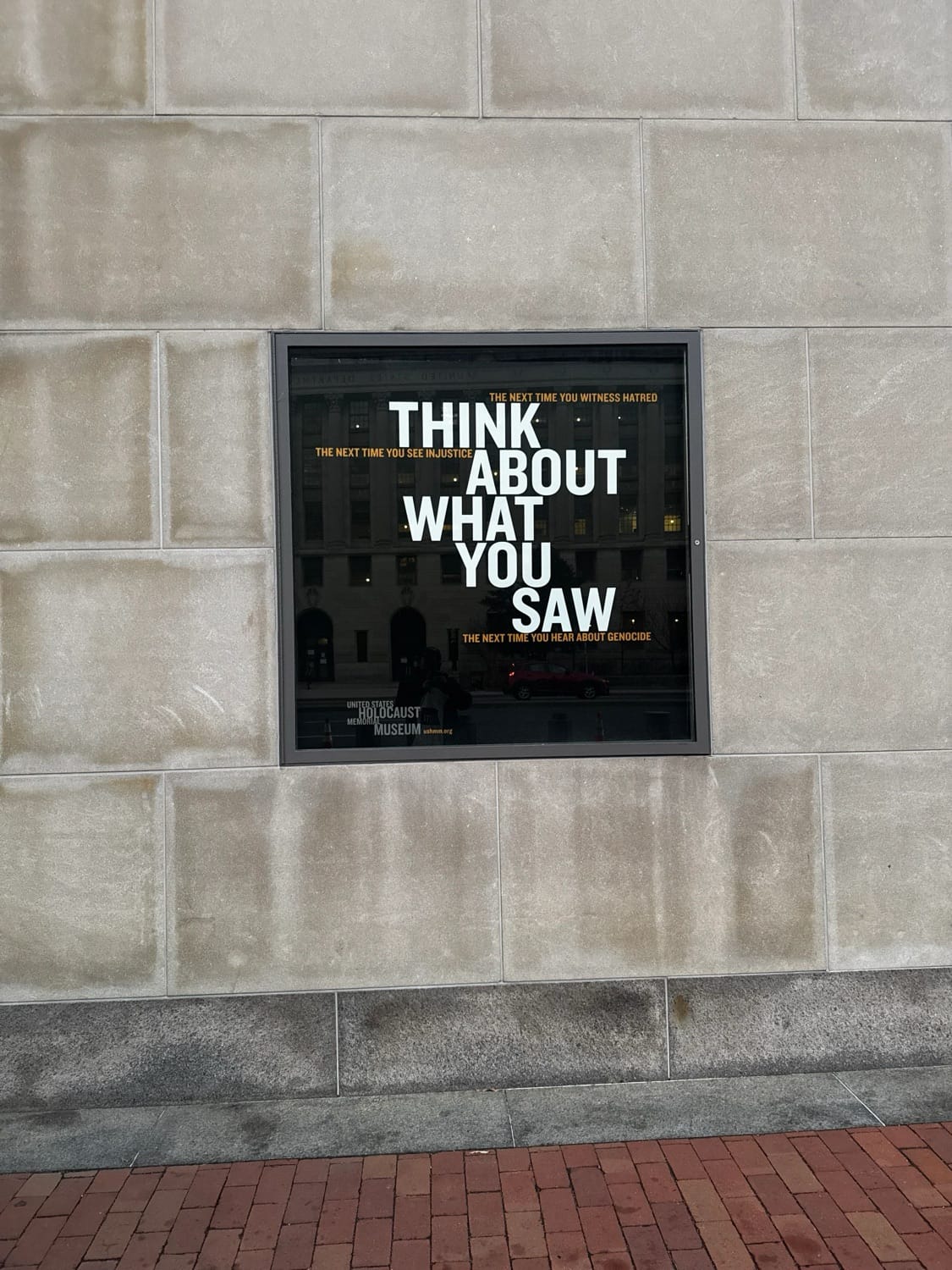
Today, I visited the Holocaust Museum in Washington, D.C., and it’s a day I won’t forget. Walking through those halls, seeing the faces of those who lived—and died—through one of humanity’s darkest chapters, is an experience that goes far beyond words. It’s gut-wrenching, sobering, and deeply personal.
One display had Elie Wiesel’s quote: "The opposite of love is not hate, it’s indifference.” It stopped me in my tracks. Indifference—that word hit me hard. So much of what happened during the Holocaust wasn’t just because of active hate, though there was plenty of that. It was allowed to happen because so many people stayed silent, turned a blind eye, or believed it wasn’t their fight.
Another display featured a quote from Martin Niemöller that’s etched in my memory:
“First they came for the socialists, and I did not speak out—because I was not a socialist. Then they came for the trade unionists, and I did not speak out—because I was not a trade unionist. Then they came for the Jews, and I did not speak out—because I was not a Jew. Then they came for me—and there was no one left to speak for me.”
These words weren’t just a history lesson—they felt like a warning.
The Holocaust didn’t start with gas chambers and concentration camps. It started with words. It started with division. It started with people being "othered"—labeled as less-than, blamed for society’s problems, and stripped of their humanity bit by bit. It happened gradually, and it grew because too many people thought, This doesn’t affect me, or worse, This isn’t my problem.
Walking through the museum, you see the unimaginable made real. Families torn apart. Children sent to their deaths. Ordinary people turned into numbers, into ashes. It’s impossible to grasp the enormity of the suffering, but what struck me the most was how many chances there must have been to stop it before it got that far. And how those chances were lost because too many people stayed silent.
I thought about the world we live in today—how hate, fear, and division are creeping back into our lives. It’s not the same, but some of the signs are frighteningly familiar. Antisemitism is rising. Racism, bigotry, and xenophobia are out in the open. People are being dehumanized, targeted, and cast aside. The warning signs are flashing, and it’s up to all of us to pay attention.
As I left the museum, I knew I couldn’t just walk away from what I’d seen. It’s not enough to remember. We have to act. We have to speak up—every single one of us. We have to spread love and kindness, not just in big, sweeping gestures, but in the small, everyday moments that shape the world we live in.
I made a promise today: I won’t be indifferent. I won’t stay silent. If I see hate, I’ll call it out. If I see someone in need, I’ll help. I want to be someone who builds bridges, who fights for kindness and compassion, who tries, in whatever small ways I can, to make the world a better place.
I know it won’t always be easy. The voices of division are loud, and the pull to just stay quiet can be strong. But silence isn’t an option. As Martin Niemöller’s words remind us, if we don’t speak up for others, there might not be anyone left to speak when the time comes for us.
This is about more than just remembering the past—it’s about protecting the future. It’s about standing up for what’s right, even when it’s uncomfortable or inconvenient. It’s about choosing love, even when hate seems easier.
Elie Wiesel also said, “For the dead and the living, we must bear witness.” Bearing witness means more than just acknowledging what happened—it means letting it change the way we live. It means committing to be better, to do better, and to love more fiercely.
Today, I’m carrying that commitment forward. I hope sharing this inspires you to do the same. Together, we can push back against hate. Together, we can choose kindness and compassion. And together, we can make sure that history’s darkest chapters are never repeated.
Stronger together,
Mike