“Art is not what you see, but what you make others see.”
— Edgar Degas
That quote says everything about why I create. Degas was describing how art changes perception. He wasn’t focused on the brush or the medium. He was focused on the moment when someone feels something new because of what they’ve seen.
That idea lives at the center of everything I make, music, imagery, words. The process has evolved, but the heart of it is still the same. I want to make something real enough that someone recognizes a part of themselves in it.
The Human Part of Creation
When I started working with AI, I wasn’t chasing a trend or a new skill. I was trying to help my wife and daughter tell their story. Both live with endometriosis, and for years I watched them face pain that most people never see or understand.
Words never felt like enough. I wanted to show what they were feeling—to make people see what life with invisible pain looks like. That became the start of everything.
AI gave me a way to create images that reflected their strength, exhaustion, and grace. It opened a world I had wanted to be part of but hadn’t been able to enter before. I’d always admired visual artists but never saw myself in that space. AI made it possible to finally step into it, not as a shortcut, but as a way to give shape to something deeply personal.
At first, I worried it might take away the humanity of the work. Most of my life had been spent building real things, teams, systems, communities, and a mission that mattered. I didn’t come from an artistic background, but I've always been drawn to it.
AI gave me a doorway. It helped me explore ideas I’d carried for years but never knew how to express. What started as a way to support my wife and daughter through their journey with endometriosis became something much larger. It turned into a way to translate emotion, to capture what words alone couldn’t.
Letting technology into that process felt risky, but it also felt necessary. It gave me a language I didn’t have before. And once I found it, the art started to come alive.
Then I learned that AI doesn’t create meaning. It reflects what you bring to it. The result only feels alive if your input is honest. When I worked from empathy and truth, the images carried that energy forward.
AI became a translator, a tool, between feeling and form. It helped me move from thought to image before the emotion faded. It helped me hold my family’s story long enough to share it.That part still belongs to me.
How I Work
Every piece begins with something small, an image, a memory, a single phrase that feels too heavy to keep inside. I sit with it until it sharpens. Then I start shaping it.
Sometimes it starts with a song. A melody leads me to a lyric. The lyric turns into a visual idea. From there, I build the image that matches the sound. Other times the order reverses. A visual sparks a sound, and a song begins to take shape.
That’s what I love most about this process. The tools have no rules. I can move between mediums without losing momentum. I can let one form of expression breathe into another until it finds its full shape.
But I always return to the same question: does it feel honest? If it doesn’t, I start over.
Respect for the Craft
I’ve always admired people who dedicate their lives to art—musicians, painters, writers. They spend years building skill through repetition and patience. I respect that kind of focus. For me, that kind of focus has never come easily.
Living with ADHD means my ideas move faster than my hands. They collide, drift, and reshuffle before I can capture them. I used to watch artists who could stay locked in for hours, shaping something until it was done, and I wanted that discipline. I had vision and emotion, but not the technical control to bring it forward.
That’s still a work in progress. I’m learning more about the craft side every day. But with these tools, I can finally keep pace with my thoughts. I can take an image that’s been floating in my head for months and bring it to life in hours. I can turn a feeling into a song before it fades.
AI doesn’t replace the hard work of creation. It opens a new doorway into it. The painter has a brush. The musician has an instrument. I have a set of digital tools that expand what’s possible. The intent stays the same: to bring something true into the world.
Every generation of artists has faced this same moment of tension. Cameras once threatened painting. Synthesizers once threatened live musicianship. Each time, art found a way to evolve instead of disappear. I believe the same thing is happening now.
What I Want You to Feel
When I release a song or post a new image, I’m not asking people to notice the technology. I’m asking them to feel something human. I want them to see connection in unexpected places.
A visual piece might come from the grief of watching someone I love in pain. A lyric might rise out of a moment when words failed me. These creations are markers of time, small ways of saying, “I was here, and I felt this.”
That’s all I’ve ever wanted from art. To leave a trace of being human.
Standing in the Middle
We’re living in a creative era filled with noise, speed, and constant output. AI has added even more volume to that world. The temptation is to chase scale, to produce more, faster. But that’s not the kind of art I want to make.
I want to stay grounded in reflection. I want to slow down enough to find the emotional core in what I’m making. Technology can multiply ideas, but only intention gives them purpose.
I’m not here to reject progress or worship it. I’m here to use it well. To build work that carries heart, not hype. To explore what’s possible without losing what’s human.
The Purpose of Art
Degas said that art is what you make others see. That idea holds everything together for me. Whether it’s a song that helps someone feel less alone or a digital portrait that opens a new conversation, the purpose is the same, to move people toward awareness.
Art gives us a mirror and a window at the same time. It helps us recognize what’s inside us while opening us to someone else’s world.
That’s why I keep creating. I want to help people see differently. Not through tricks or novelty, but through shared humanity.
A Challenge
If you’ve made it this far, take this with you.
Do something today with what you have. Use the tools in front of you. Write something honest. Say something kind. Build something small that helps someone else breathe a little easier.
You don’t need perfect conditions to make something meaningful. You don’t need permission. You already have enough to start.
That’s what I’m doing, working with what I have, learning as I go, and trying to leave the world a little better, brighter, and more human.
Your version will look different, but it matters just as much.
Start there.
“The future of art lives in the space where human and machine meet.” --Mike Baker
PS: The “Human / Machine / Light” Series
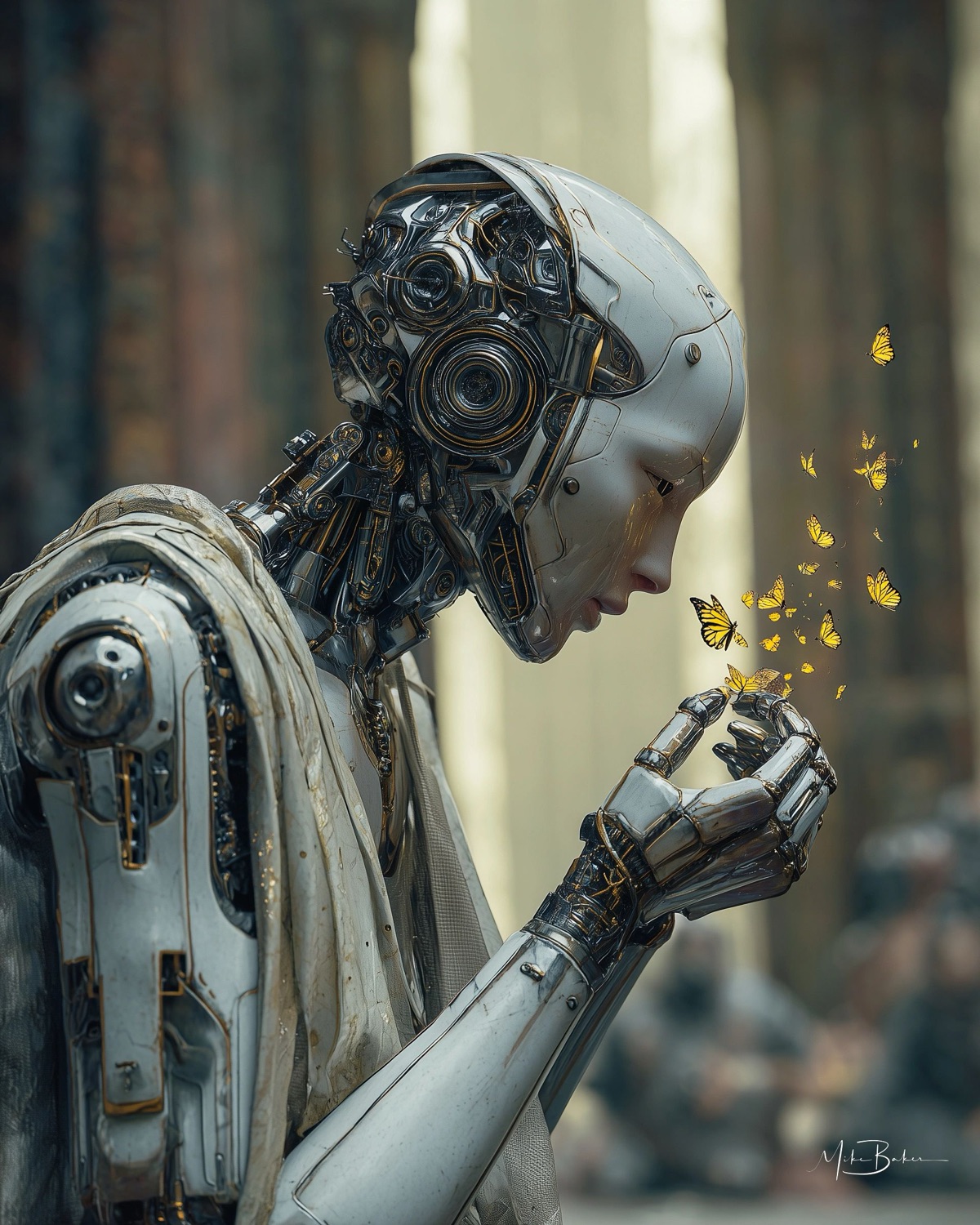
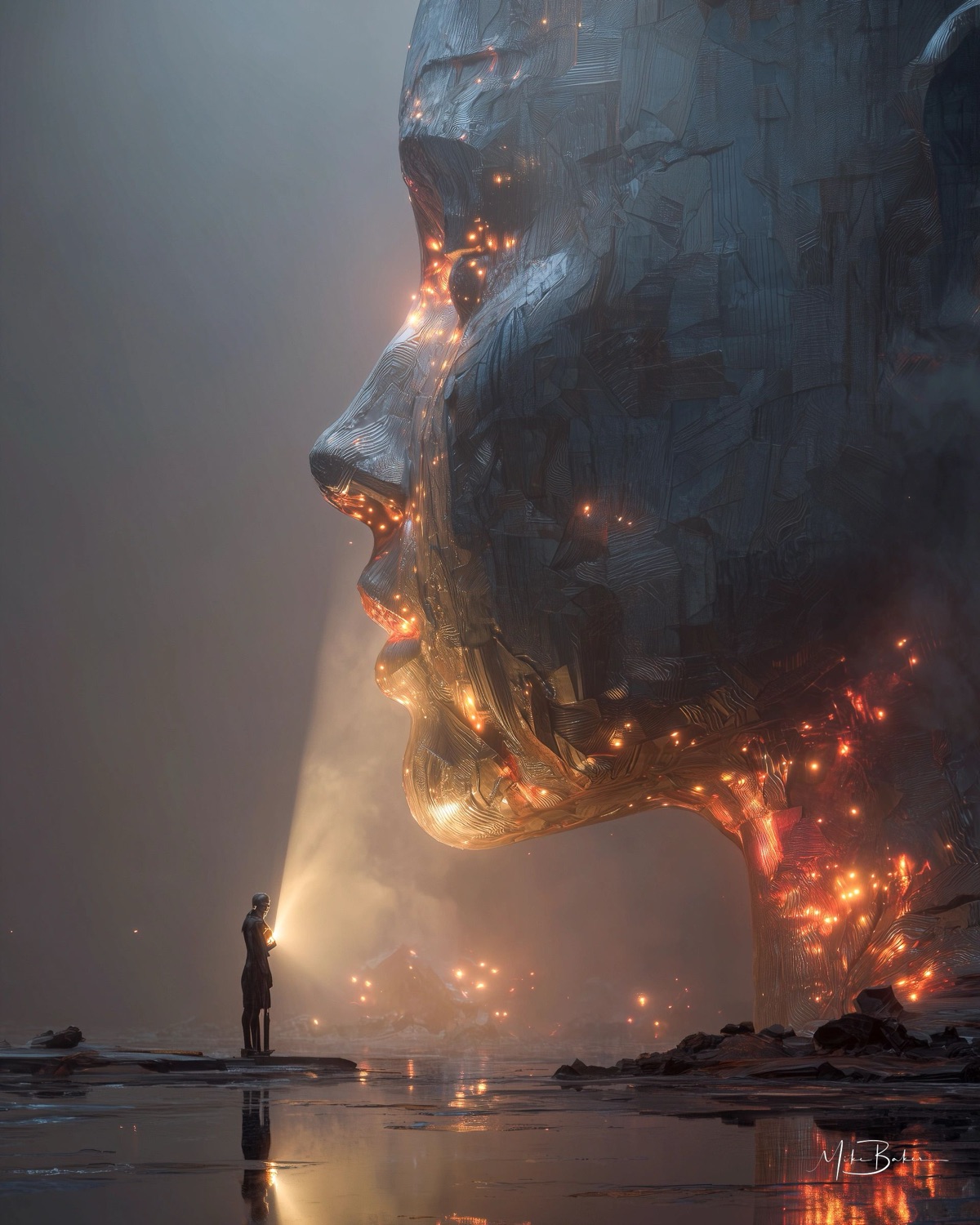
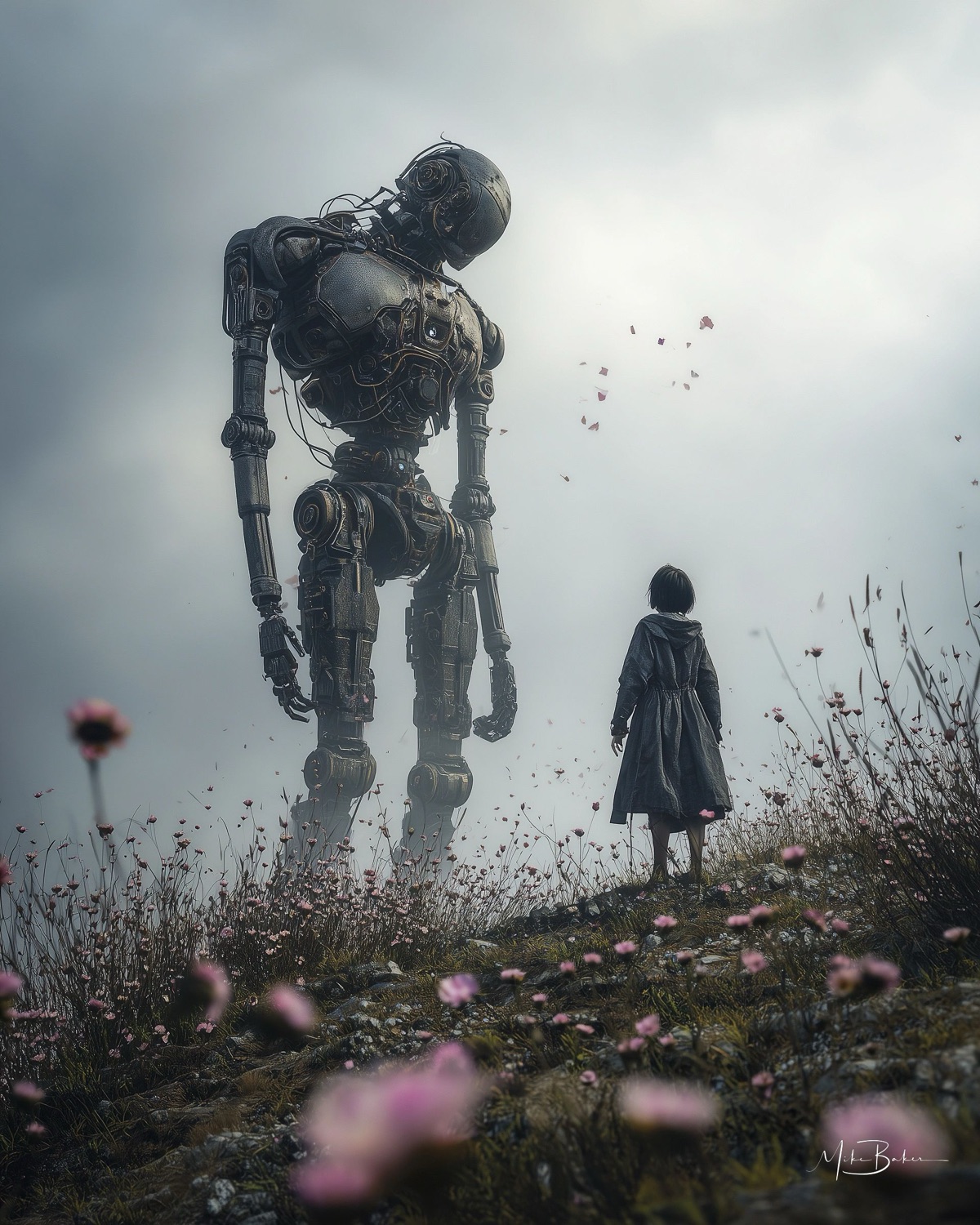
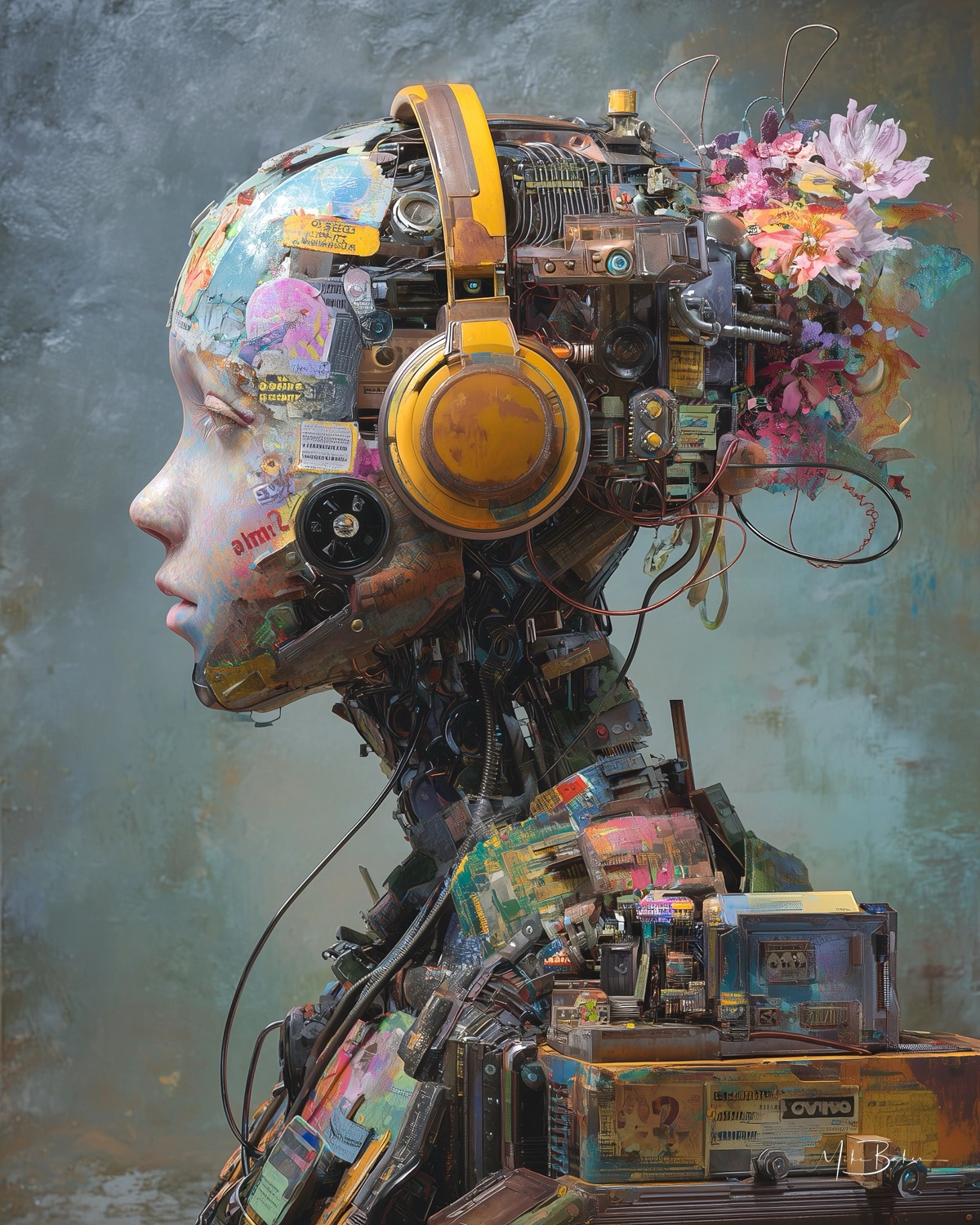
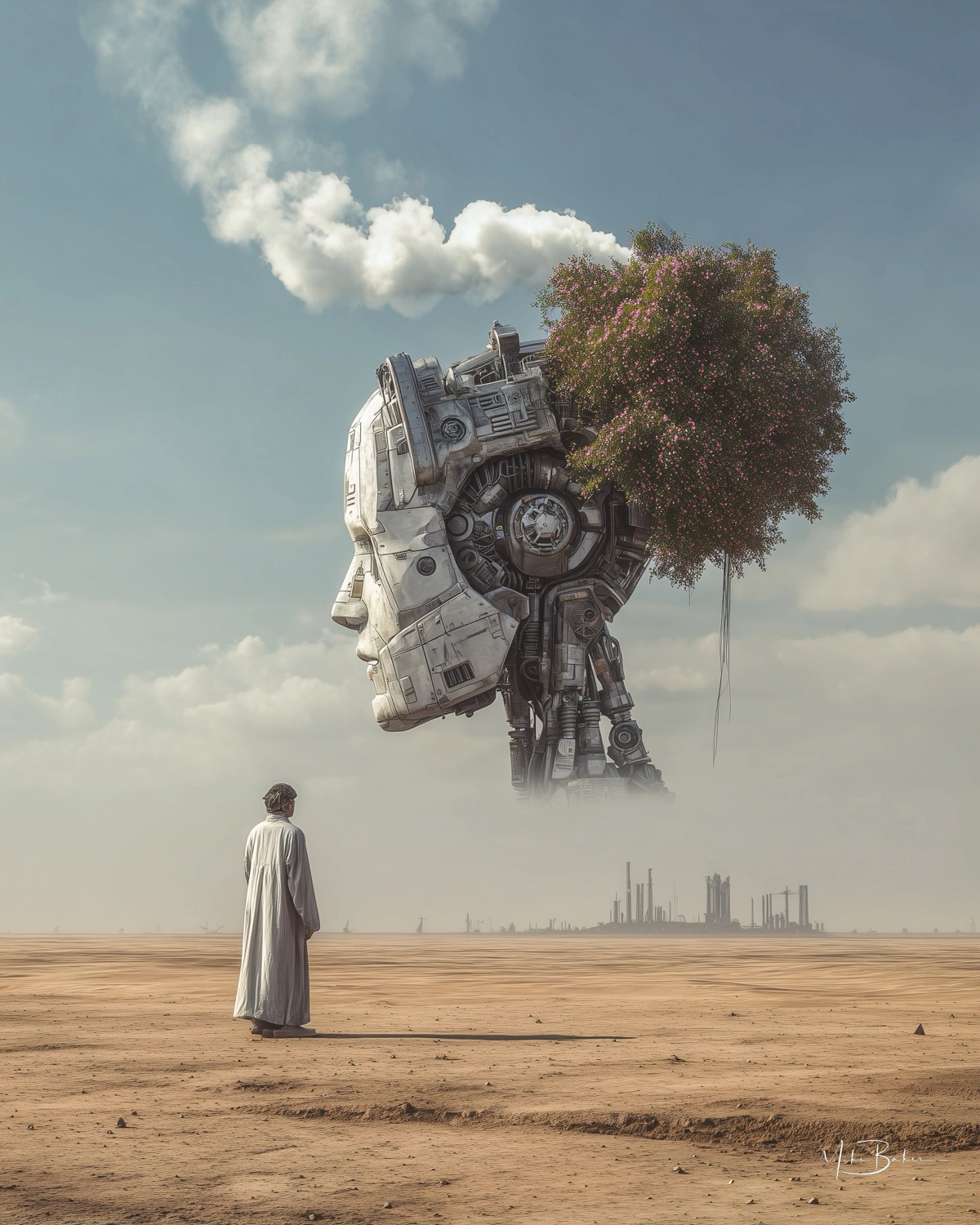
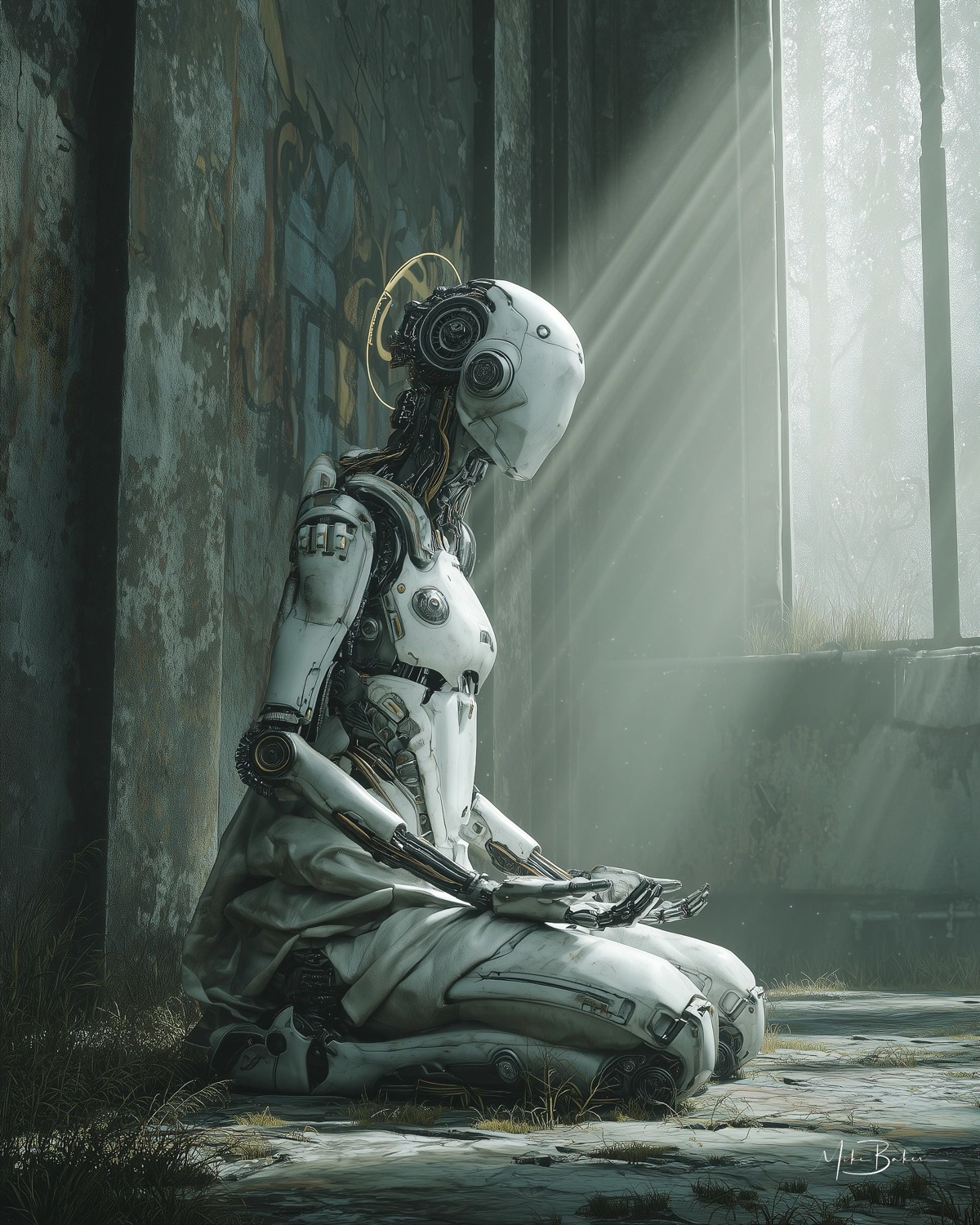
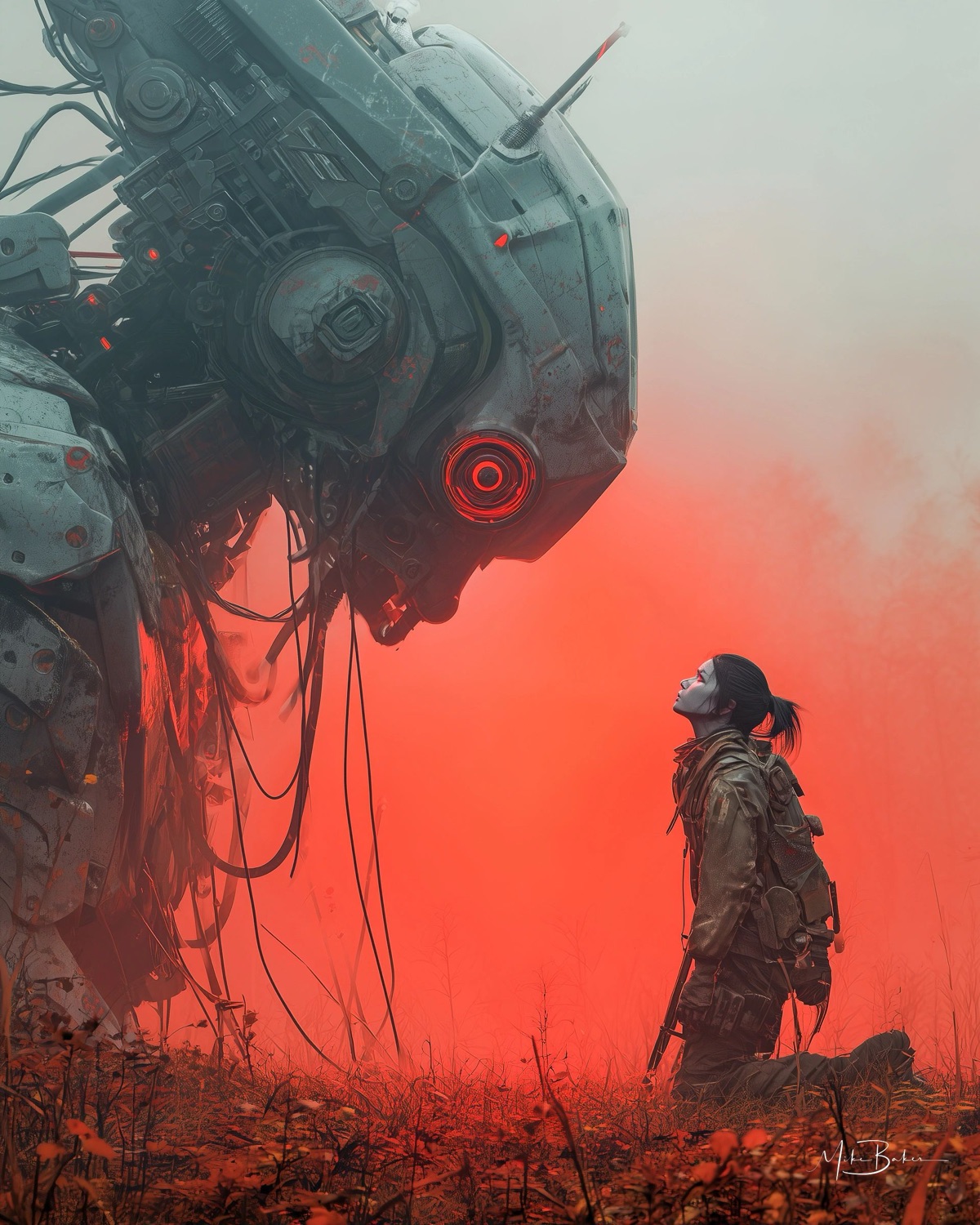
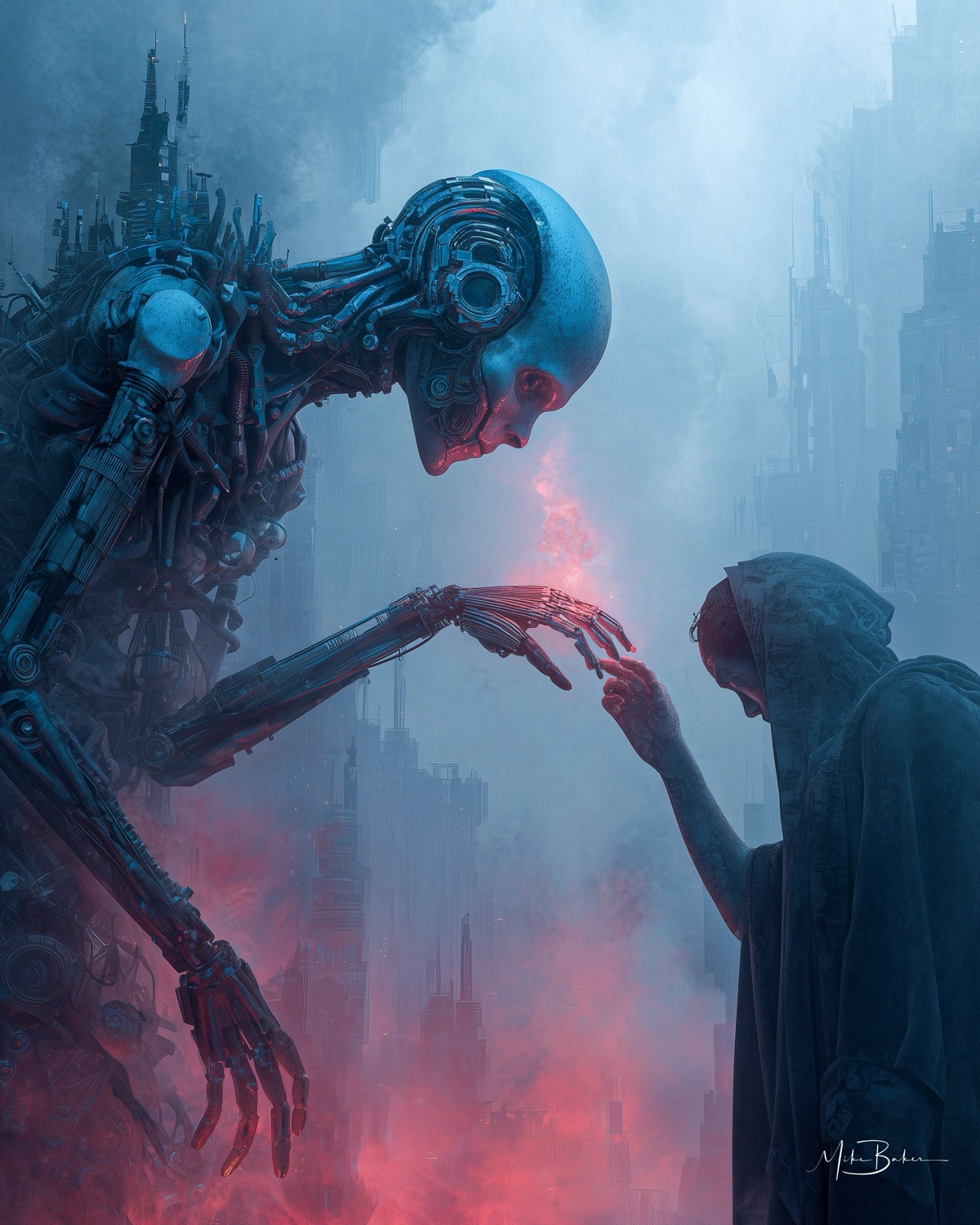
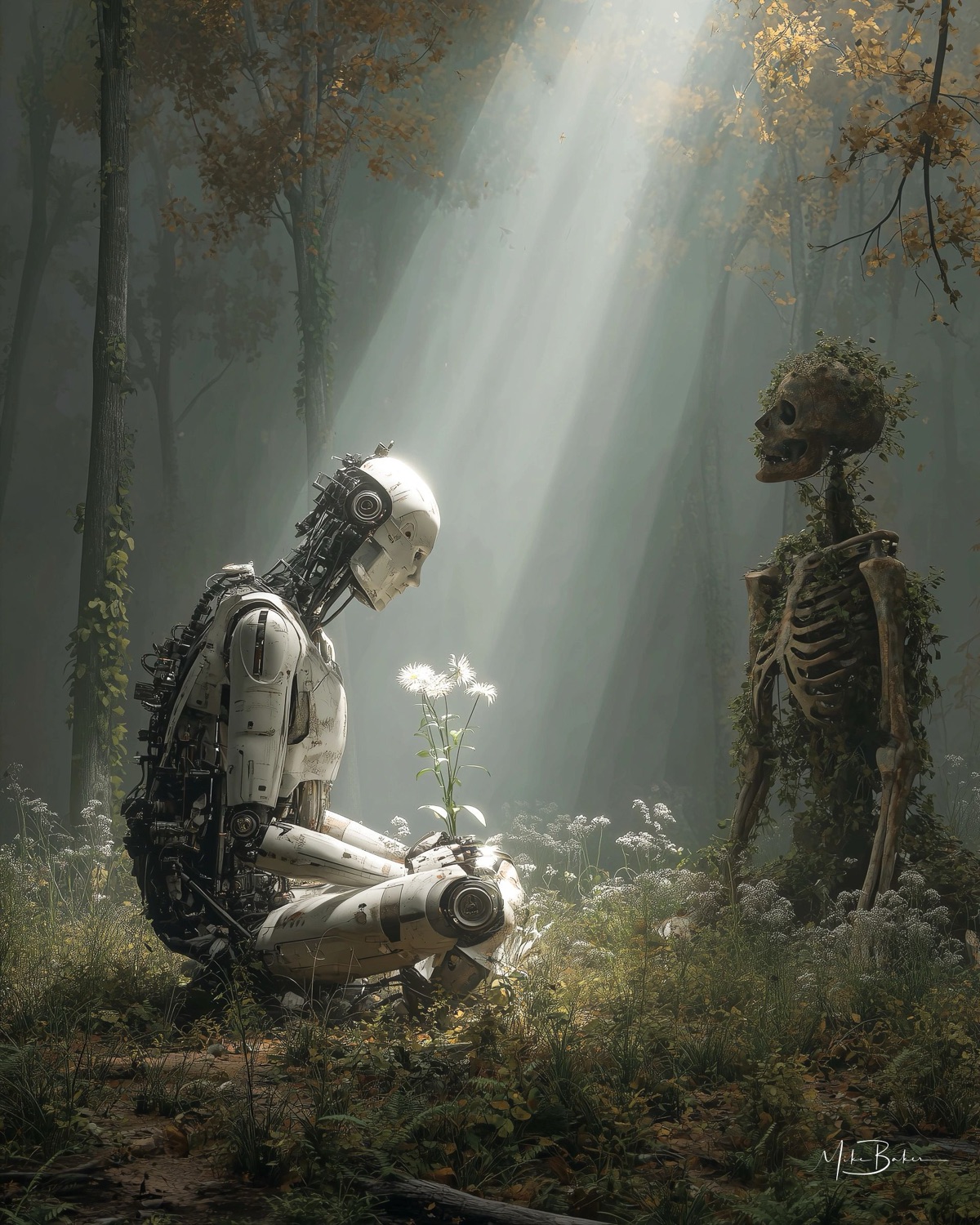
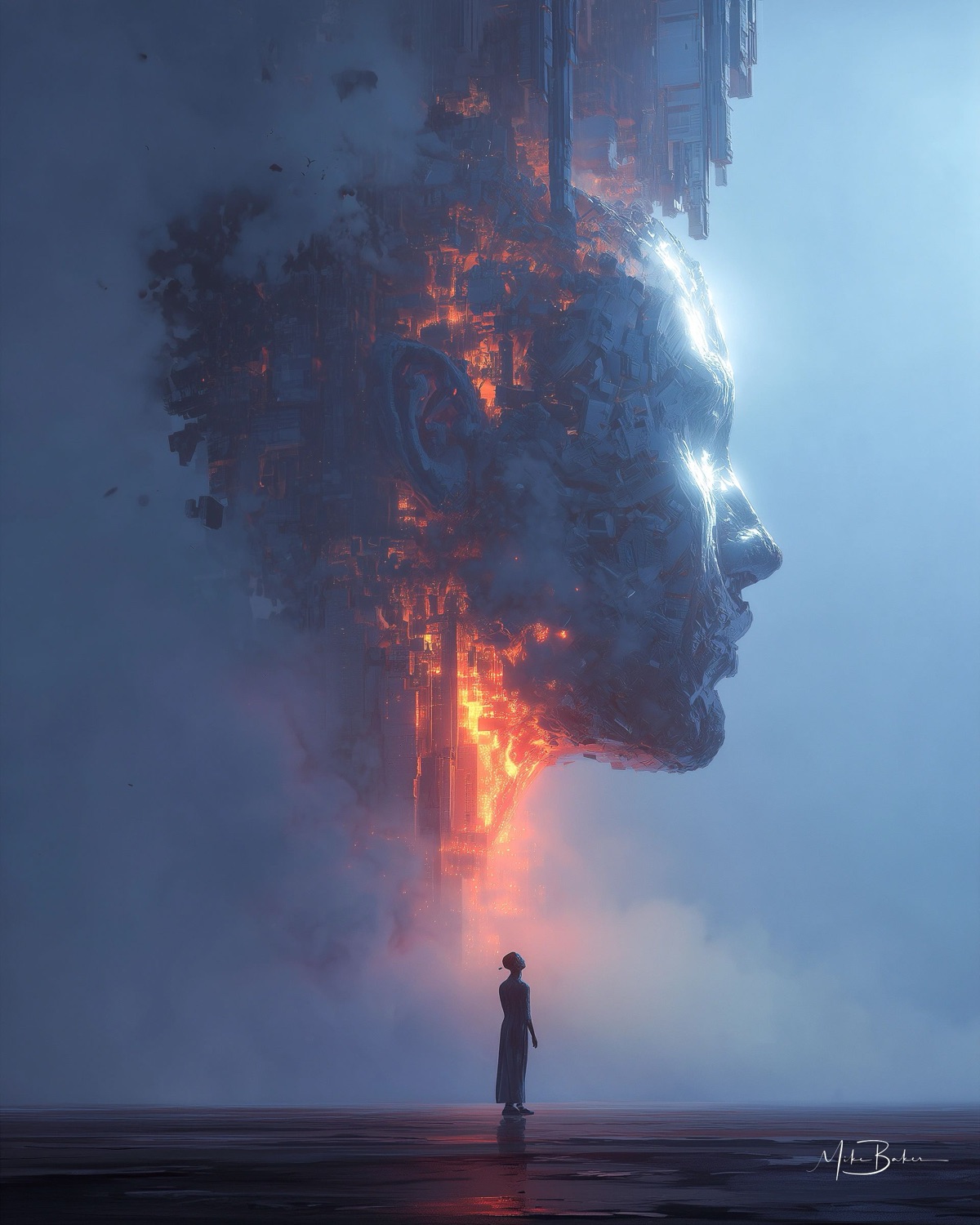
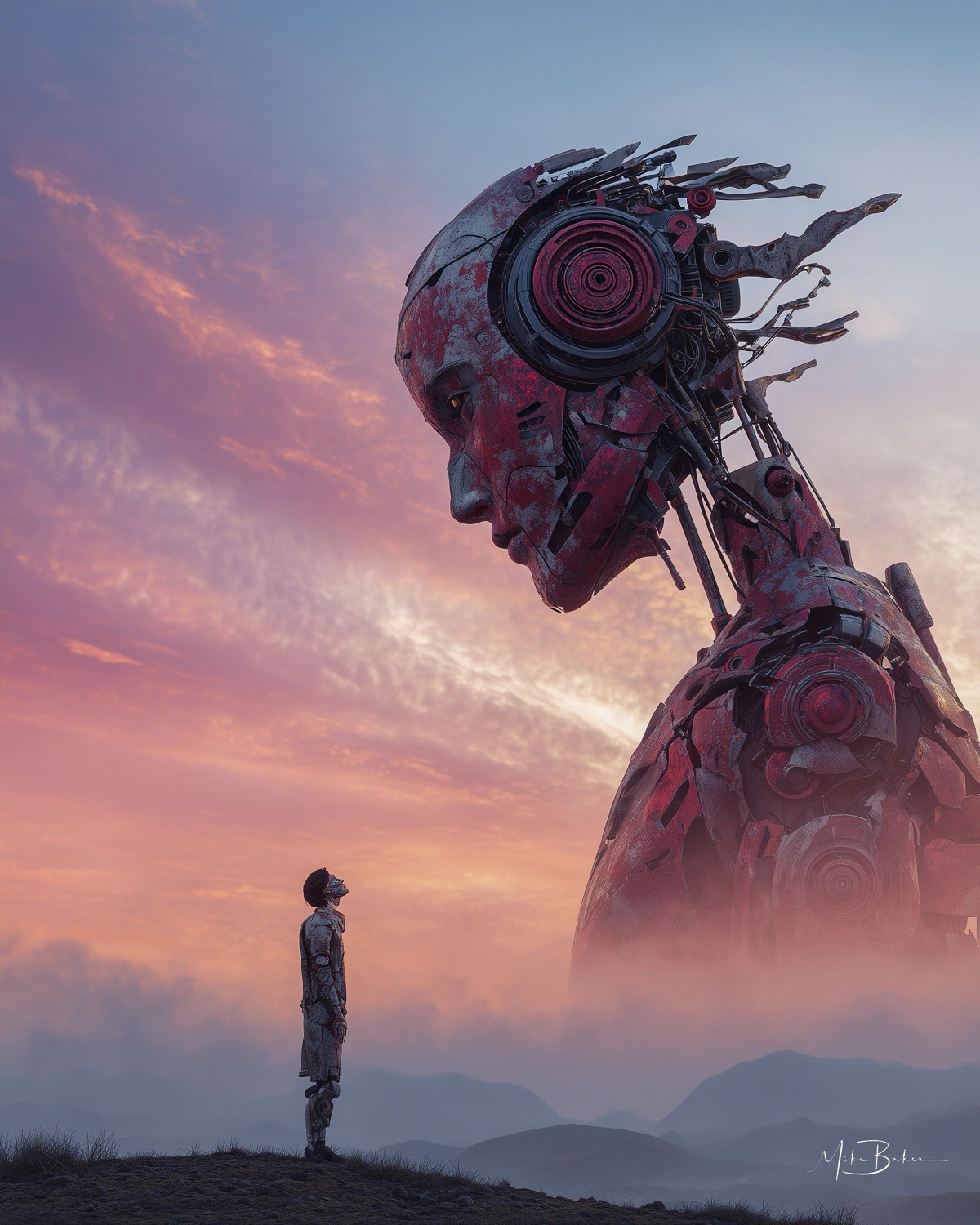
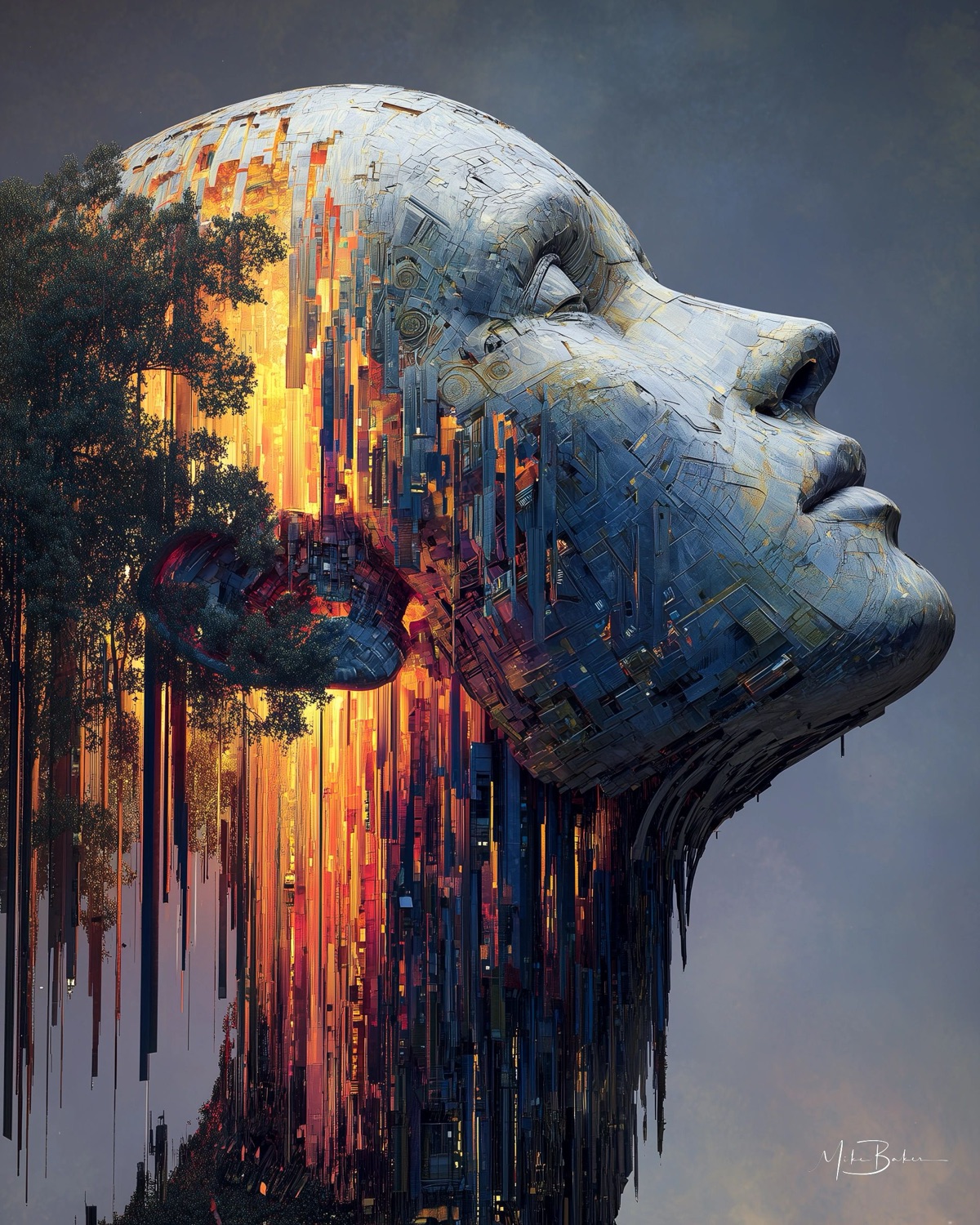
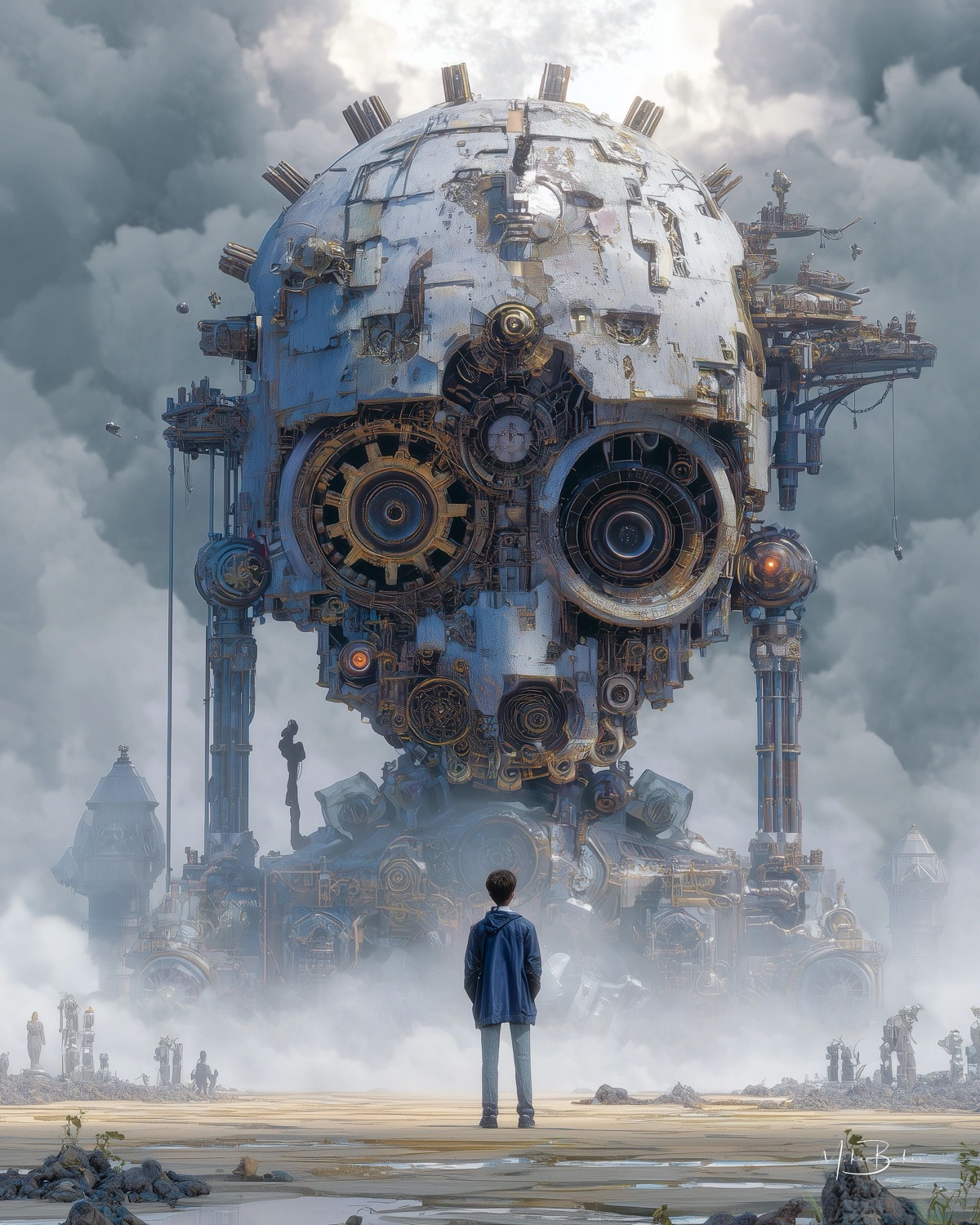
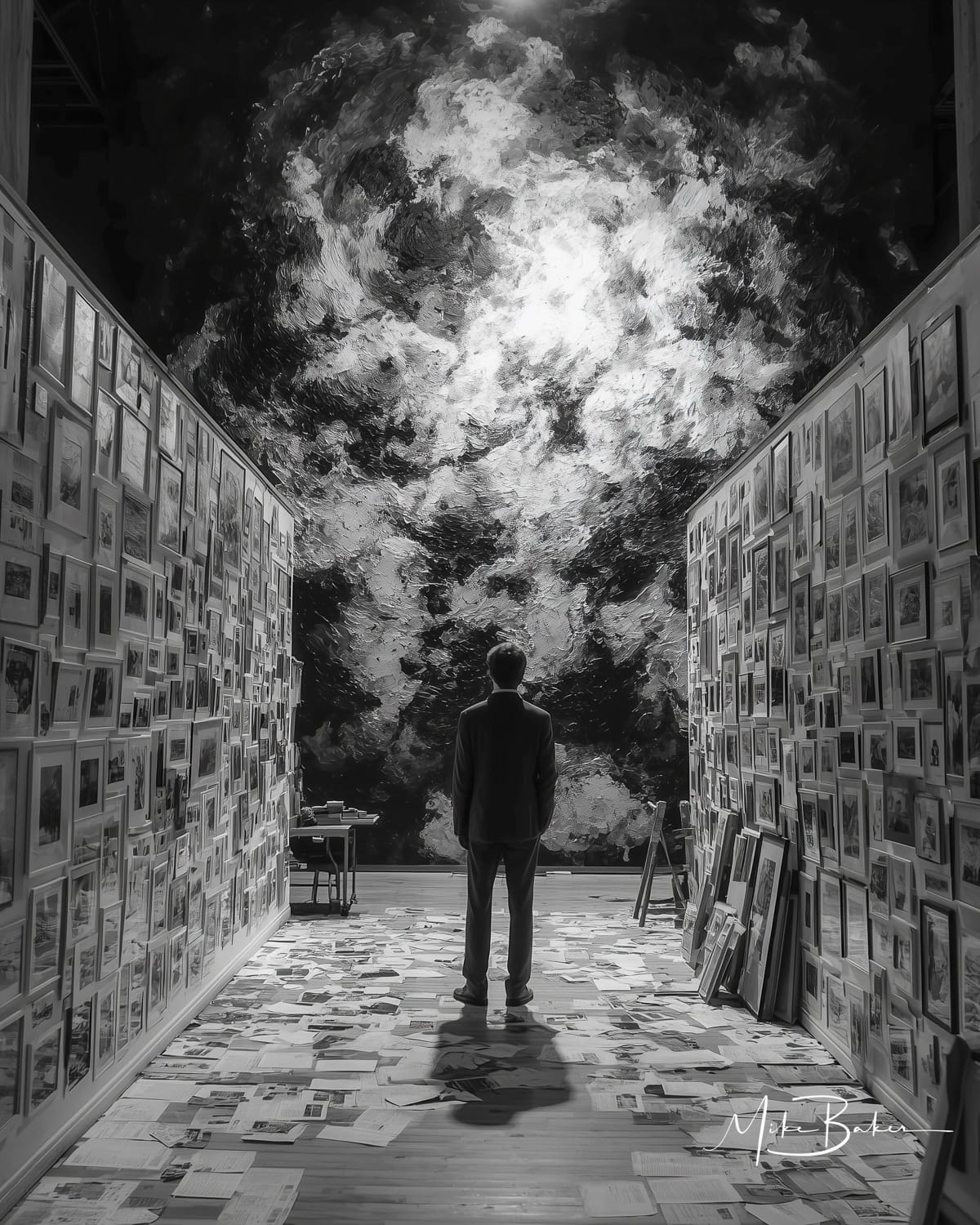
The images below are part of a new visual series I’ve been creating called Human / Machine / Light.
This series explores what it means to stay human in a digital world. Each piece is a dialogue between technology and emotion, a search for where circuitry ends and spirit begins. These works come from the same impulse that drives my music and writing: to see what happens when empathy meets innovation, to find beauty in the tension between progress and presence.
Human / Machine / Light asks what remains human when creation becomes shared, when a tool amplifies, but feeling still leads.
They remind me that creation still belongs to us. The tools have changed, but the spark remains human.
So take a look. See what you see. Then go make something of your own.
Use what you have. Leave the world a little better, brighter, and more human.