Why the Tools Changed But the Voice Is Still Mine
Mike Baker
There’s a lot of noise right now about artificial intelligence and art.
Every week another headline appears asking some version of the same question: Is this the future of creativity, or the end of it?
Musicians are arguing. Visual artists are arguing. Writers are arguing. Some people see incredible possibilities in these new tools. Others see them as a threat to the integrity of creative work itself.
If you spend any time online you’ll notice how quickly the conversation turns emotional. Some artists are curious. Some are cautious. Some are furious.
I understand all of those reactions.
Art matters deeply to the people who make it. When something new enters the creative process, it can feel like a disruption to something sacred. And when the change happens as quickly as artificial intelligence has arrived, it’s natural for people to wonder what it means for the future of their craft.
But if you zoom out for a minute, something interesting becomes clear.
This conversation isn’t new.
Artists have been having versions of this argument for generations.
When electric guitars first showed up, many people said they weren’t real instruments. The sound was too artificial. Too loud. Too far removed from traditional music.
When synthesizers entered the studio world, critics said they were cold and soulless. Real musicians, they argued, played real instruments.
When hip-hop producers started sampling records, people accused them of theft. They said it wasn’t original music at all.
Each of those moments looked like a crisis at the time. But eventually the culture adjusted, and those tools became part of the language of music.
Looking back now, we don’t see the technology as the story.
We see the artists who used it to say something meaningful.
That’s the part people often forget.
The tool was never the story.
The story has always been the human being behind it.
The Voice Behind the Work
I’ve been writing songs for a long time. Long before anyone was arguing about artificial intelligence.
Most of them begin the same way songs always have.
Something in life refuses to leave you alone.
Sometimes it’s a question that keeps showing up in the middle of the night. Sometimes it’s a feeling you can’t quite explain. Sometimes it’s something beautiful that makes you stop for a second and pay attention.
Eventually those moments turn into words.
Those words turn into melodies.
And sometimes those melodies turn into songs that connect with someone else who felt the same thing.
That part of the creative process hasn’t changed.
Artificial intelligence didn’t invent that.
And it can’t replace it.
A machine doesn’t live my life. It doesn’t carry my doubts or sit with the quiet moments when the world feels heavier than it should. It doesn’t wrestle with grief or hope or the complicated tension between the two.
Those things belong to people.
So when someone hears my music and asks whether AI had anything to do with the tools I used to shape the sound, the honest answer is yes. Sometimes it did.
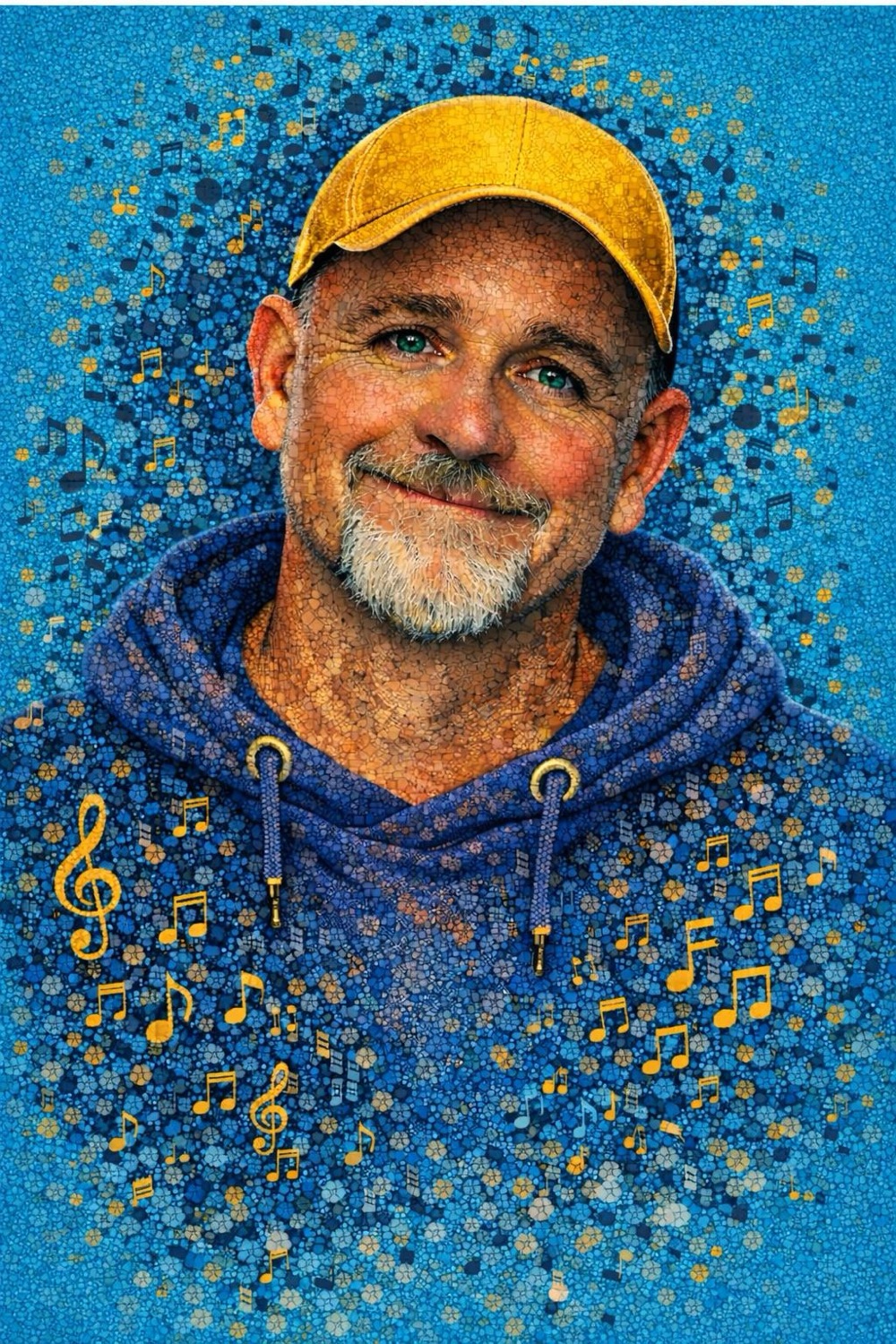
But the voice behind the songs is still human.
Mine.
The Pushback Is Real
Not everyone is comfortable with that idea, and I understand why.
Since I started experimenting with AI-assisted art and music, I’ve heard from artists who believe the technology is harmful. Some worry it undermines the value of human musicianship. Others believe these systems are built on creative work that was never properly credited or compensated.
There are also legitimate questions about the environmental impact of large-scale computing systems and the energy required to run them.
Those concerns deserve serious attention.
Artists care deeply about their craft. When the ground shifts beneath an industry, people react strongly because they’re trying to protect something they love.
I’ve even experienced that pushback directly.
During an art exhibition where I displayed AI-assisted work alongside traditional pieces, the reactions were all over the map. Some visitors were curious and excited. Others were thoughtful and cautious. A few were genuinely angry.
One person told me bluntly that what I was doing made me a terrible artist.
That moment stayed with me.
Not because criticism is unusual — every artist runs into that eventually — but because it revealed something deeper about the conversation we’re having.
This isn’t just a debate about software.
It’s a debate about identity.
Artists are trying to understand where they fit in a world where the tools are changing faster than the culture can process them.
And that tension is real.
Writing Inside the Noise
The album Love Is Louder Than Fear came out of that tension.
It was written during a moment when the world felt unusually loud.
Politically. Socially. Personally.
Everywhere you looked people seemed to be shouting past each other instead of listening. Everyone was certain. Everyone was defensive. Everyone seemed to be carrying things they didn’t want to talk about out loud.
It felt like the volume of the world had been turned all the way up.
I wasn’t trying to escape that noise when I wrote these songs.
I was trying to stay open inside it.
That’s harder than it sounds.
The culture we’re living in right now rewards outrage. It rewards certainty. It rewards people who are willing to flatten complicated human experiences into simple arguments.
But life isn’t simple.
And the best songs rarely come from simple places.
Some of the songs on this record push back against the noise. Some of them sit quietly and observe. Some laugh when things get too heavy. Some break a little under the weight of the moment.
All of them come from the same place: trying to remain human in a time when the world often encourages us to harden.
Fear Is Loud
If you listen closely to the album, you’ll hear fear show up again and again.
Fear of losing people.
Fear of saying the wrong thing.
Fear of becoming numb to everything happening around us.
Fear spreads quickly because it promises protection.
It tells us to retreat into certainty. To pick sides. To stop listening to people who disagree with us.
But something else keeps showing up too.
Love.
Not the polished version you see printed on posters.
The stubborn version.
The kind that appears in small, ordinary moments.
A good word at the right time. A conversation that refuses to turn into an argument. Someone choosing empathy when cynicism would be easier.
Love rarely dominates the headlines.
But it keeps changing lives quietly underneath them.
That idea became the backbone of this record.
Not because it sounds nice.
Because it feels necessary.
Principles for Creating in an AI World
If we’re going to use new creative tools responsibly, I think we should at least be honest about how we use them.
Here’s where I’ve landed.
First, the story still has to come from a real life. Technology can help shape sound, structure, and experimentation, but the reason a song exists has to come from something a person actually experienced.
Second, the artist owns the work. If I release a song into the world, it belongs to me. I take responsibility for the message, the meaning, and the impact it has on listeners.
Third, honesty matters. Pretending technology doesn’t exist when it clearly plays a role doesn’t help anyone. Neither does pretending it replaces human creativity. Transparency builds trust.
Fourth, technology should expand creativity, not replace it. New tools should give artists more ways to explore ideas, not fewer.
Fifth, artists will take different paths. Some musicians want nothing to do with AI, and that choice deserves respect. Art has always contained many approaches.
What hasn’t changed is the purpose of the work itself.
We make music to connect with people. To tell the truth about being human. To remind someone else they’re not alone for a few minutes.
The Invitation
You don’t have to love every experiment I try.
You don’t have to agree with every tool I explore.
But if you listen closely, I hope you hear the part that hasn’t changed.
The questions.
The stories.
The human voice behind the music.
Technology will keep evolving. Tools will come and go.
But the reason people create will remain the same.
We’re trying to make meaning out of being alive.
The world is heavy right now. Most of us can feel that.
But we’re still here.
And I still believe something simple, even when it sounds unfashionable in a cynical moment.
Love is louder than fear.