
Before you get disappointed that she canceled, remember that she wanted to go too. She was looking forward to getting out of the house and spending time with you. By the time she says she’s hurting too much, she might have spent hours trying to figure out a way to make it work. Now she’s disappointed, and she’s waiting to find out whether you’re going to be kind about it.
That moment matters. Especially if she has had to have that conversation with you before.
Kellie and Sammie both live with endometriosis. When I write about women’s pain, I’m thinking about my wife and daughter, and how much I still have to understand. Years of working in healthcare haven’t made me an expert on what either of them feels. I’ve wanted answers so badly that I’ve tried to solve things before listening long enough to understand what was being asked of me.
I wish loving them were enough to make me good at this. There’s work involved in being someone they feel comfortable telling the truth to, especially when the truth means changing something I wanted.
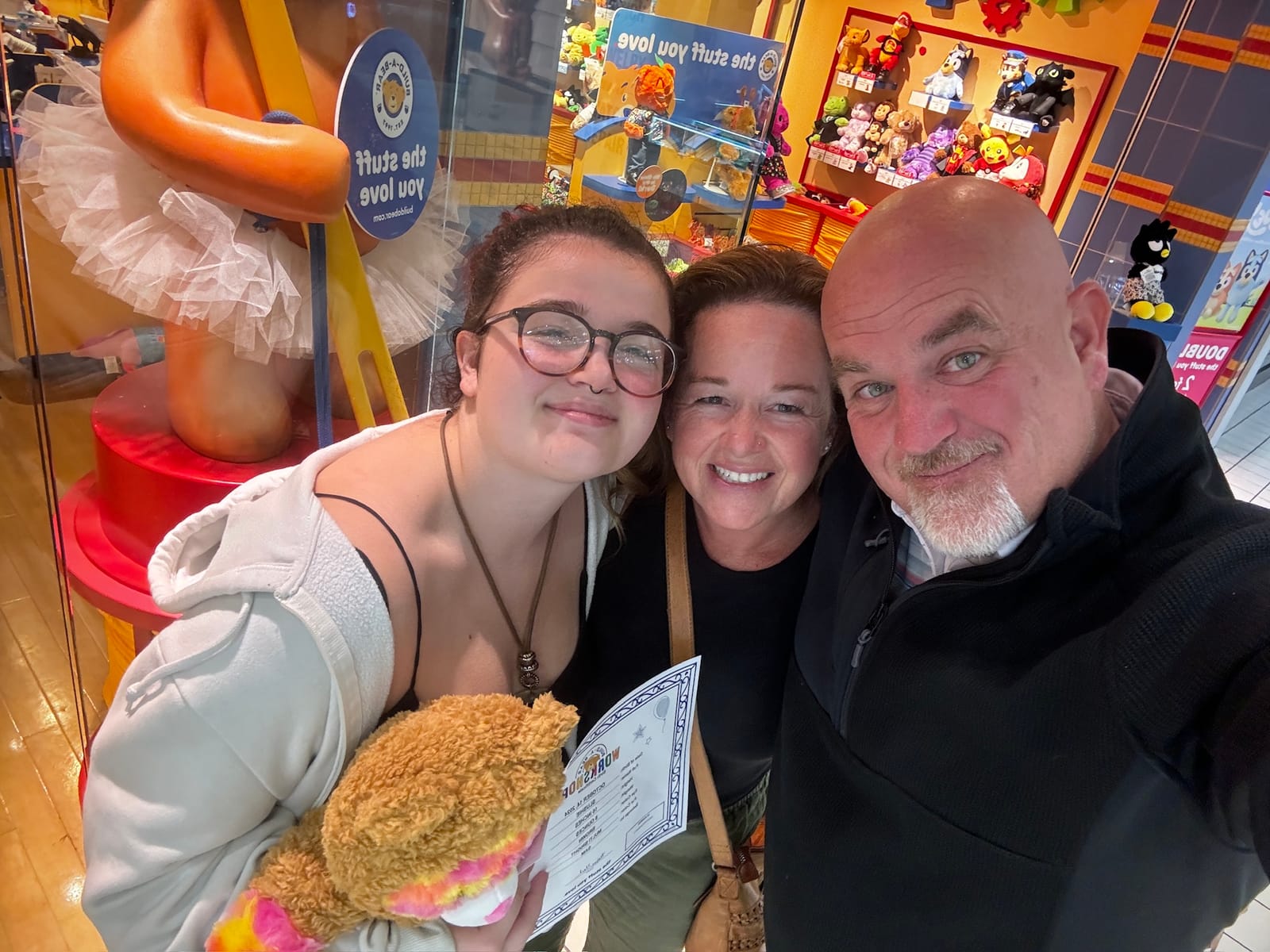
The photo with this piece is from a trip to Build-A-Bear for Sammie’s birthday. I want people to see this part of her life when I talk about endometriosis. She’s my daughter. She has things she loves and a future she’s figuring out. The illness requires attention she ought to be able to spend on other things.
A photograph records something you were there for. The things pain keeps someone from doing are much harder to see.
The medical expenses arrive with an amount due. Endometriosis also affects work, relationships, and quality of life. Those costs show up in choices that look ordinary if you don’t know what went into making them.
Think about using another day of paid time off for an appointment. She knows how much leave remains and whether there’s enough for the trip she wanted. Before she finds out whether the appointment will help, she has already had to give something up. Someone asks why she isn’t taking a vacation, and now she has to decide how much of her medical life she wants to explain.
At work, there might be an opportunity she wants and never applies for. The travel feels unmanageable, or the schedule leaves too little room for care. Nobody sees an application that was never submitted. It looks as though she wasn’t interested. She knows how interested she was.
Friendships have their own losses. Canceling dinner again means wondering whether a friend still believes you want to be there. If the invitations slow down, you’re left deciding whether to explain yourself another time. Meanwhile, you miss your friend. You miss being easy to make plans with.
Each loss comes with an explanation that makes it sound manageable. There will be another dinner. The opportunity wasn’t ideal anyway. Eventually, all those explanations leave very little room to say, “I wanted that, and I’m sad I didn’t get to do it.”
I want us to leave room for that sentence.
As a dad, it hurts to think about Sammie having to account for pain while making decisions about her future. Growing up already asks enough of a person. I want her to have room to discover what she loves and change her mind about what comes next. An illness adds decisions she never asked to make.
With Kellie, I have a responsibility to understand what her experience means in the life we share. If I only notice her pain when it changes my plans, there is an awful lot I’m missing. She deserves my attention before something becomes inconvenient for me.
I think men underestimate the cost partly because we hear about a decision after she has already worked through it. By the time she says she needs to stay home, she has considered whether she would manage the drive and how she might feel afterward. Our disappointment arrives after hers. Sometimes we respond in a way that makes ours the one she has to take care of.
That’s hard to admit. It’s also something we have the ability to change.
We need to stop treating what she accomplishes as proof that she feels fine. Getting through work tells us very little about what she has left for the evening. A smile tells us something about that moment, without telling us what her body feels like. We ought to be interested enough to ask.
If telling you she hurts means preparing for doubt, she has to decide whether she has the energy for the conversation. Saying less might start to feel easier. I don’t want someone I love keeping something to herself because dealing with my response would make a difficult day worse. Her pain already asks enough of her.
This matters in intimacy too. If pain affects sex, sulking or withdrawing affection gives her another reason to worry about being honest. She deserves to accept tenderness without wondering what will be expected afterward. Talk about what feels comfortable together, and take her answer seriously.
There are ordinary things to do with this understanding. Handle dinner, including deciding what to make and cleaning up. Learn about her condition so she doesn’t have to explain everything from the beginning. If plans change, ask whether she wants you to let people know, and respect what she wants shared.
When there’s time, ask her what she misses. Something she has stopped mentioning might still matter a great deal to her. You don’t need to find a replacement or a reason it will work out before you’ve heard why it hurts.
For the woman reading this, I’m sorry for the things you wanted and didn’t get to do. You know what those choices meant to you. They deserve more care than a quick reminder that there will be other opportunities. Some losses stay with you, and you ought to have someone who is willing to hear about them.
If she sent you this, take a little time with it. Tell her which part you hadn’t understood. Ask whether she wants to talk, and respect it if she’s too tired. There’s still plenty you have responsibility for learning on your own.
I wrote Believe Her the First Time because I love my daughter, and because wanting to help her left me with things I needed to learn. Kellie’s experience belongs in that work too. Sammie wrote the foreword in her own voice. I’m grateful she was willing to share that part of herself.
The book is for men who want to understand what support looks like in the life they share with someone who has endometriosis. Read the first chapter free on my website today. An email signup opens the chapter and companion workbook and adds you to Just an Ordinary Tuesday. If you’re ready for the full book, buy Believe Her the First Time on Amazon.
Please give this some of your time before she has to ask again. She deserves to feel understood by the people she loves.
P.S. The podcast is back. The new episode of Still Here, Still Trying, “The Team in Front of You,” starts with four beer-league hockey games in one day and ends up being about trust and what people can do when they aren’t worried about whether everyone else will do their job. Listen or watch here.