
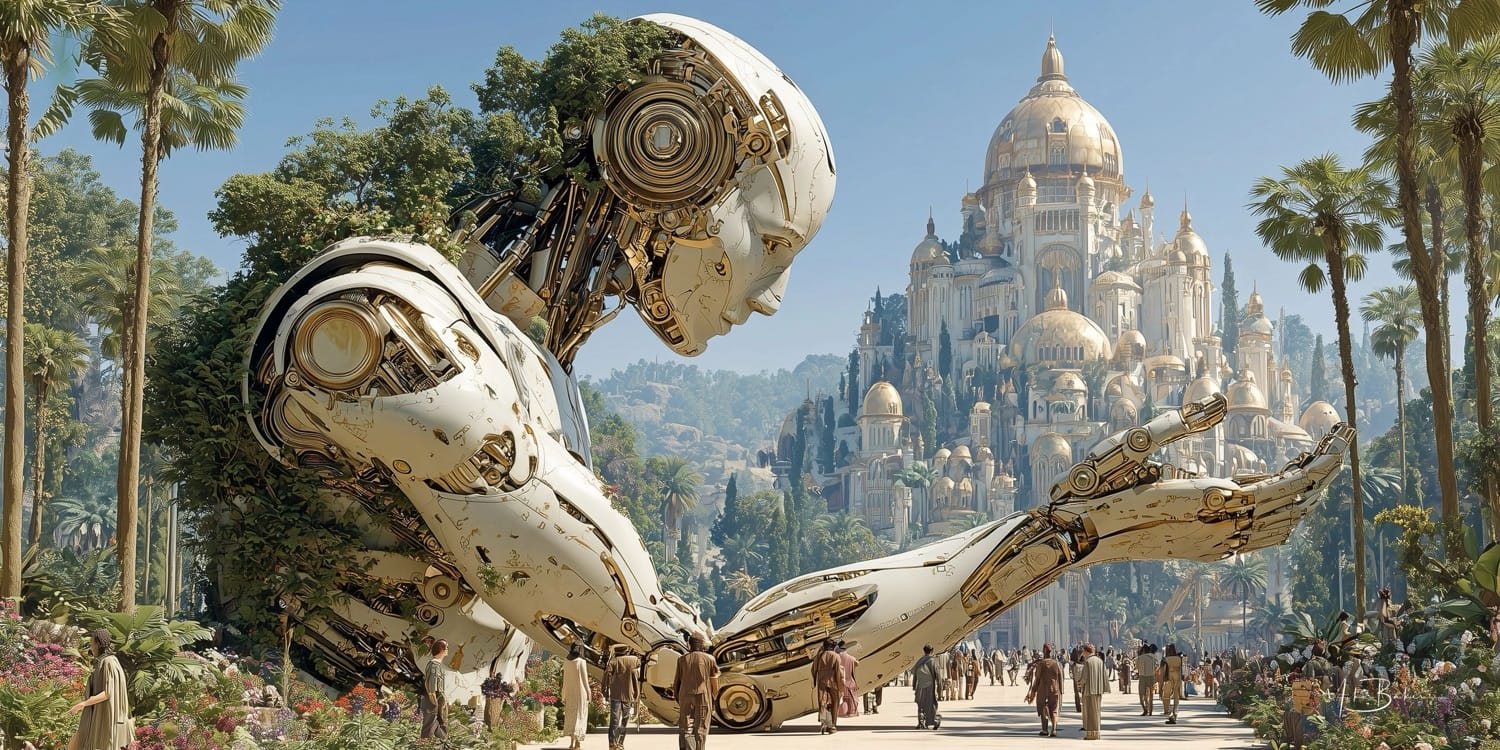
We are wasting too much of what makes us human. The future gets better when we stop feeding division, stop fearing every tool, and start building with purpose.
There is a thought I keep coming back to lately, and it hits me a little harder every time.
We are wasting too much of what makes us human.
We are wasting intelligence. We are wasting creativity. We are wasting compassion. We are wasting courage, imagination, and energy on systems and distractions that leave people smaller, sicker, angrier, more exhausted, and more divided than they need to be. And the part that sticks with me is this. It does not have to stay this way.
When I look around, I do not see a world that is empty of answers. I see a world overflowing with possibility. I see brilliant people in every community. I see nurses, teachers, artists, builders, researchers, parents, caregivers, organizers, and quiet problem-solvers carrying gifts this world desperately needs. I see people with insight, grit, lived experience, and vision. I see people who could help heal, invent, create, repair, teach, and lead in powerful ways.
What I also see is how often all of that gets buried under systems that drain the life out of people before they ever get the chance to fully step into what they were made to do.
That loss matters more than we talk about.
I am not only thinking about the suffering right in front of us, though that is real enough. I am also thinking about everything that never gets the chance to happen because too many people are stuck in survival mode. How many ideas die under stress. How many songs never get written. How many future leaders get dismissed too early. How many people spend years fighting to be heard, fighting to get care, fighting to keep a roof over their heads, fighting to make rent, fighting to hold their families together, fighting just to keep going. When all your energy goes into survival, there is not much left for beauty, invention, service, or big thinking.
That should bother us more than it does.
Human beings are still extraordinary
For all our flaws, human beings are incredible.
We build. We adapt. We create medicine, movements, art, and second chances. We tell stories that help people feel less alone. We rebuild after loss. We carry wisdom forward. We solve hard problems when we decide the work matters more than our ego.
That capacity is still here.
The problem is not that we lack talent. The problem is that we keep getting pulled away from what matters most. Greed pulls us away. Ego pulls us away. Politics pulls us away. Outrage pulls us away. We get trapped in endless cycles of blame and distraction. We sort each other into camps. We hate the other side faster than we try to understand the actual problem. We spend more time proving people wrong than building anything right.
Meanwhile, the future sits there waiting on us.
Too much of life is spent surviving
I think about this a lot through healthcare because that is where I spend so much of my life. I see every day what happens when people do not get care soon enough, when systems become harder to navigate, when women spend years trying to get someone to listen, when mental health support feels too far away, when policy gets shaped by ideology instead of real human need. I see how much pain gets normalized. I see how much human capacity gets lost when people are exhausted, untreated, uninsured, dismissed, or forced to fight through barriers that never should have been there in the first place.
And healthcare is only one piece of it.
This shows up in education. In housing. In food insecurity. In loneliness. In communities full of good people that are stretched thin by systems built without enough heart. It shows up in the way artists get treated like a luxury. It shows up in the way care work gets undervalued. It shows up in the way public life rewards cruelty, spectacle, and noise while quieter, steadier, more humane work gets overlooked.
That is where the bigger question starts pressing on me.
What could we build if we finally got serious about the future?
What happens when more of our smartest people are freed up to solve real problems instead of gaming broken systems?
What happens when more of our creativity goes toward healing, access, beauty, and human flourishing instead of feeding outrage machines and hollow status games?
What happens when more of our innovation gets aimed at reducing suffering, increasing dignity, and giving more people a real shot to live fully?
I think the answer is simple.
A lot becomes possible.
We could build communities where fewer people fall through the cracks. We could create healthcare systems that feel more human and less punishing. We could support families better. We could design schools that see kids more clearly. We could create policy that treats housing, dignity, and care like real human needs instead of talking points. We could build a culture that values truth, service, and meaningful work more than spectacle.
We could make life feel more livable.
That matters because people are hungry for that kind of future, even when they do not always know how to name it. They are tired of noise. They are tired of division. They are tired of being manipulated, milked for attention, and told that cruelty is strength. People are looking for something steadier than that. Something more grounded. Something more honest. Something worth building toward.
AI is part of the conversation, but it is not the point
Technology belongs in this conversation, including AI. But it is only one part of a much bigger human question.
A lot of people hate AI. I understand why. Some of that reaction comes from real fear. Fear of losing work. Fear of losing creativity. Fear of losing what feels human. Fear that something fast and cheap is going to crowd out the slow, honest work that actually means something. Those fears are not stupid. They deserve respect.
But fear alone does not shape a good future.
The question is not whether AI exists. It does. The question is who learns it, who shapes it, who benefits from it, and whether it gets used to deepen harm or help solve things that matter. We can stand back and let other people define it for us, or we can get involved and insist that tools like this serve people instead of diminishing them.
The tool is not the vision. The vision is the point.
That is what I do not want us to lose.
I do not want us so distracted by the argument over tools that we forget to ask what kind of world we are trying to build with them. I do not want us so busy hating each other that we never get around to solving the real problems. I do not want us to accept a future that is more efficient but less human. That would still be a failure.
Used with wisdom, tools help us move faster on the things that matter. They help researchers look at patterns sooner. They help small teams do bigger work. They help creators create. They help communities organize information and find better answers. That matters. But it only matters if the people using those tools still care about dignity, truth, responsibility, and human wellbeing.
Our bigger problem is not intelligence. It is distraction.
I do not think the biggest problem in front of us is a lack of intelligence. I think it is a lack of focus, humility, and shared purpose.
We are too easy to distract. Too easy to inflame. Too easy to sort each other into teams and start swinging. We hate the other side fast. We assume the worst quickly. We get tribal in a heartbeat. It gives people a quick sense of certainty, but certainty is cheap when it keeps the work from getting done.
That is how so much potential gets wasted.
Not only through greed, though greed does plenty of damage. Not only through bad policy, though bad policy wrecks lives every day. Potential also gets wasted in ego, fear, cynicism, contempt, performance, and our addiction to conflict. We pour our energy into hating each other while the future keeps asking better things from us.
That is a brutal trade.
The future should feel more human, not less
The future I want is more human, not less.
I want a future where people have a better shot at being well. I want a future where fewer women have to beg to be believed. I want a future where kids grow up with more support and less fear. I want a future where creativity is accessible, where communities are stronger, where work has more dignity, where policy reflects real life, and where progress gets measured by whether actual human beings are doing better.
I want a future where innovation helps us care for each other more effectively, not avoid each other more efficiently.
And I still believe that kind of future is possible.
Not because I think people are perfect. We are not. We are messy and reactive and tribal and short-sighted sometimes. We get scared. We get greedy. We get distracted. We hurt each other. We waste time on stupid things.
But another thing is also true.
Human beings are capable of astonishing courage, repair, imagination, tenderness, endurance, and wisdom. I have seen too much of that to quit believing in it now. I have seen people keep loving through impossible circumstances. I have seen communities rally when families are in crisis. I have seen exhausted people still show up for each other. I have seen creativity come out of pain in ways that leave me stunned. I have seen what happens when somebody finally gets support, finally gets heard, finally gets the right care, finally gets room to breathe. Lives change. Possibility expands. Something opens back up.
That is why this matters.
We could still build something beautiful
We do not need less humanity in the future. We need more. More conscience. More wisdom. More courage. More imagination tied to responsibility. More people willing to build instead of perform. More people willing to use every good tool available without letting the tool become the master. More people willing to stop treating each other like enemies long enough to get serious about what the future could hold.
Because the truth is, we could still build something beautiful from here.
Not perfect. Not clean. Not easy. But beautiful in the way real things are beautiful. A future shaped by compassion, courage, invention, responsibility, and care. A future where more people get the chance to contribute what is in them. A future where fewer lives are crushed under preventable suffering. A future where our brilliance gets aimed at healing more than harming. A future where we stop wasting each other.
That future does not arrive by accident. We have to choose it. We have to shape it. We have to build toward it on purpose.
I still think we can.
I still think human beings are amazing when we stop wasting ourselves.
And I still think the best parts of us are worth fighting for.
Still here. Still trying.