
I have been traveling quite a bit lately, and coming home has made me notice something about home that I had never given much thought. There are the obvious parts, of course. Kellie, the kids, the dogs acting like I have been gone for six years instead of a few days, my own bed, and the familiar mess of things sitting exactly where I left them. But once I start moving through my normal routines again, another part of home begins to show up. It is made up of people I barely know.
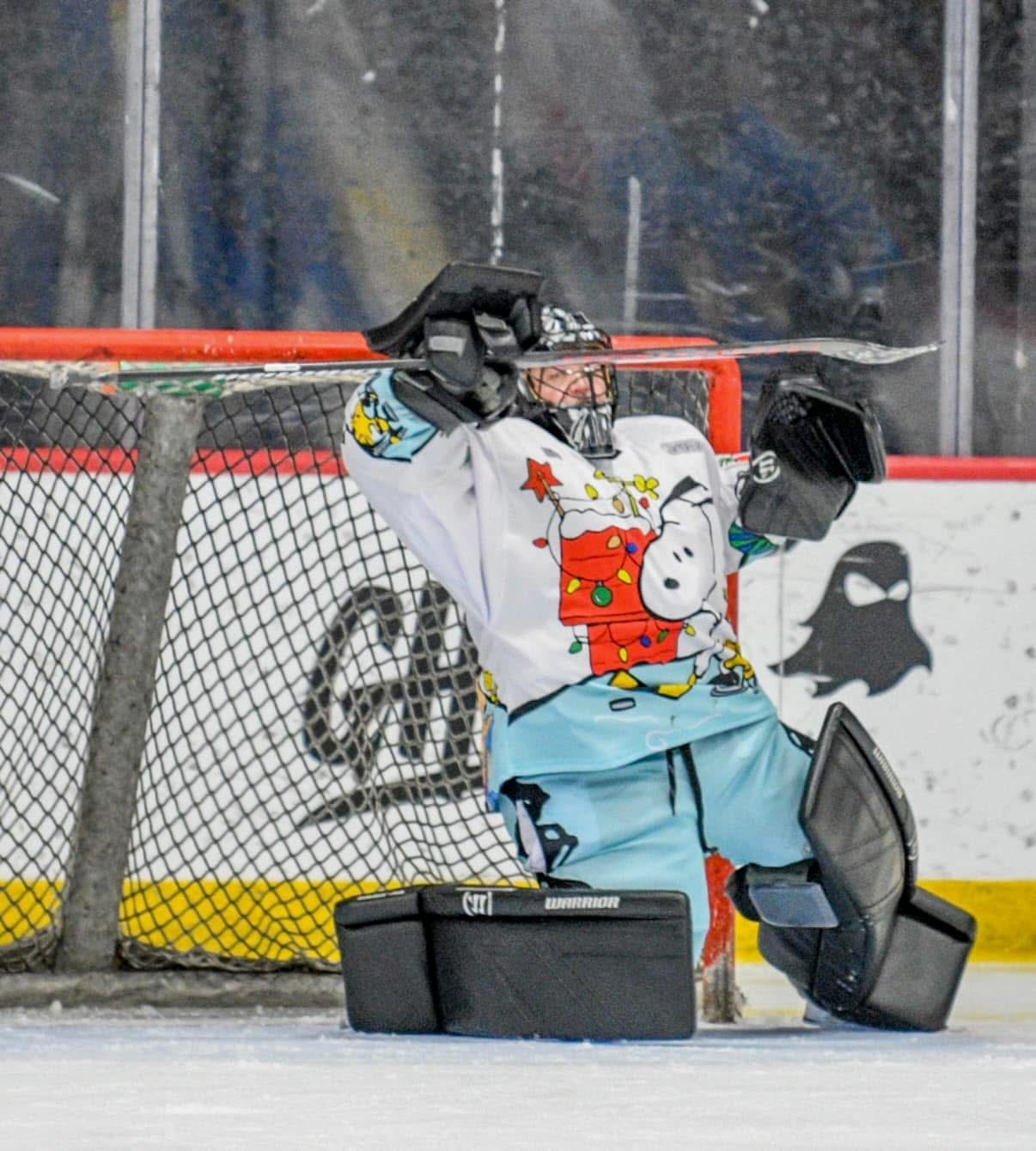
The hockey rink is probably the easiest place for me to see it. I have played beer-league hockey for a long time, which means I have accumulated a strange collection of relationships that do not fit neatly into the usual categories. There are guys I have known for years whose phone numbers I do not have and whose homes I have never been inside. I might not know their wife’s name, but I know what they do for work, what position they play, which body part hurts right now, whether one of their kids just graduated, and exactly how much shit I can give them before I need to back off. Some of those guys became real friends. Plenty never did, and nobody ever seemed bothered by that. We know each other inside the part of life where our paths overlap, and that has always been enough.
Once I started thinking about those relationships, I started seeing them everywhere. There are neighbors I mostly talk to when one of us happens to be standing in the driveway. There are people at Heritage who I do not work with directly but have passed in hallways for years. There are people around Coeur d’Alene I see often enough that we always stop for a minute, even though I have never once thought to get their phone number. There are people working at places I visit regularly who remember something I mentioned three weeks ago that I had already forgotten telling them. I do not know most of these people well, and if something terrible happened in the middle of the night, they would not be the first people I called. Still, I would notice if they disappeared.
That realization is what sent me down the research rabbit hole. I came across a 2025 paper that uses the term “fringeships” for relationships that sit somewhere between acquaintance and friendship. I hate the word a little. It sounds like something you make with yarn or something somebody wants me to unpack in therapy. I cannot imagine introducing a guy at the rink by saying, “This is Steve. He is one of my fringeships,” without immediately regretting every decision that brought me to that moment.
The idea underneath the word makes a lot more sense. Researchers were looking at relationships built through repeated contact, mutual recognition and some level of genuine affection without the obligations that come with close friendship. Nobody has to remember to text. Nobody is trying to schedule dinner three weeks out. You keep ending up in the same place, you exchange small pieces of your life, and over time the person becomes familiar. We spend a lot of time talking about relationships as if there are the people we are close to and then everybody else. Real life has a huge middle, and I am starting to think I have underestimated how much of my own sense of connection lives there.
There is related research around what people call “third places,” the ordinary spaces outside home and work where people regularly gather. Parks, cafés, libraries, community centers, churches, gyms, rinks and neighborhood hangouts all create opportunities for the same people to keep encountering one another. Recent research has been looking at how those casual ties and familiar strangers contribute to belonging and a sense of safety. I do not want to turn that into some giant scientific declaration that talking to a guy before hockey adds seven years to your life. What interests me is much simpler. The research helps explain why a place begins to feel different once the people inside it become familiar.
COVID made some of this easier for me to see, although my experience was different from a lot of people’s because we kept playing hockey. While much of normal life was changing, the rink remained one familiar part of my week. I could walk in, see people I knew, get chirped about something stupid, talk for a few minutes about work or kids or whatever was happening, and then play. Most of those conversations were not deep, and I think that was part of their value. I did not need everyone in the building to know everything I was carrying. I had a place where people knew who I was, and I knew who they were.
That has made me think differently about belonging at work too. I have spent a lot of my career thinking about organizational culture, and leadership comes with plenty of formal tools for trying to understand whether people feel connected. We have engagement surveys, recognition programs, communication plans, retention strategies, team-building exercises, leadership development and a whole industry built around helping organizations improve culture. Some of that work is useful, and I have used plenty of it. At the same time, a huge amount of culture gets created in moments that none of those tools capture very well.
You walk through a building and recognize people who recognize you. Somebody remembers what you did over the weekend and asks how it went. You pass a person from another department and stop for thirty seconds because you have known each other for years even though you have never spent time together outside work. Someone who is normally loud seems quieter than usual, and another person knows them well enough to notice. Those interactions are small, but that does not make them meaningless. They tell people whether they are anonymous inside a place or whether their presence has registered with somebody else.
Healthcare has its own version of this, and I think we tend to look at it mainly through the clinical lens. Continuity of care matters because a clinician who knows a patient’s history does not have to reconstruct the whole story every time. Trust builds, context builds, and care gets easier when people are not starting over at every appointment. There is another kind of familiarity around the edges of care that is harder to measure. A patient walks through the door and recognizes the person at the front desk. A medical assistant remembers something from the last visit. Someone in the pharmacy knows the family. Those relationships stay within appropriate professional boundaries, but familiarity still changes the experience.
When someone is sick, scared, in pain or tired of telling the same story again, walking into a place where someone recognizes them feels different from walking into a room full of strangers. I think that difference matters more than we tend to account for. Healthcare organizations spend a lot of time trying to improve experience through systems, workflows and technology, and we should. But part of experience is also the simple feeling that somebody knows you have been there before.
There is a broader community question here too because we have become very good at removing small interactions from daily life. I order ahead because it is faster. I scan my own groceries. I buy things online and have them dropped on the porch. I check myself in when that option exists. I use technology constantly to make ordinary tasks take less time and require fewer people. I am also building an AI assistant into my own life, so I am clearly not making a principled stand against convenience. Most of that convenience is useful, and sometimes I want to buy toothpaste and leave without turning the trip into a social experiment.
What I wonder about is what happens when all those efficiencies start adding up. A two-minute conversation seems disposable when you look at it by itself. The person working Tuesday mornings at a place you visit does not seem essential to anything. Neither does the neighbor you mostly talk to while dragging the garbage cans back toward the house. But repeated encounters are how strangers slowly become familiar, and when enough of those encounters disappear, we create fewer places where that process gets a chance to happen.
Then routines change. Somebody gets another job. A business closes. A neighbor moves. You stop playing on a team. Months later, you realize you have not seen someone you used to see all the time, and because you never knew them that well, you do not know where they went. The feeling is hard to name. It is not grief in the way we usually use that word, but something familiar has disappeared and the place feels slightly different without them.
I think that is the part of this idea I keep returning to. For much of my life, I assumed relationships were supposed to progress. You meet someone, get to know them, become friends, exchange numbers and eventually spend enough time together that the relationship becomes substantial enough to count. I am not sure I believe that anymore. Some relationships might already be complete exactly where they are. The guy at hockey does not need to become somebody I vacation with. The person I see around town does not need another spot in my contacts. A coworker I am genuinely happy to see does not have to become part of my life outside the building. We can share the small piece of life where our paths cross and let that be enough.
There is something comforting about that, especially when so much of the conversation about loneliness focuses on the difficulty of building deep adult friendships. Close friends matter enormously. Family matters enormously. The people who know the complicated parts of our lives and stay close to us matter in ways these casual relationships never will. At the same time, I am starting to think a connected life is built from more kinds of relationships than I understood.
I wrote Human First while trying to understand what keeps people connected when modern life gives us more ways to move through the world without needing very much from one another. I thought a lot about family, friendship, healthcare, work, technology and the people closest to us. Lately, I have been paying more attention to the people standing a little farther out from that circle. They know a few pieces of my story, and I know a few pieces of theirs. We might never know much more than that.
When I come home after being away and start moving through the familiar places in my life again, seeing those people is part of what makes Coeur d’Alene feel like home. I did not realize how much they mattered until I started paying attention to their presence. Now I keep wondering how many people in my life occupy that middle space, and how many other people’s lives I might occupy in the same small way.
There is probably someone like that in your life too. You might not know their last name, and you might never think to call them a friend, but you would notice if they stopped showing up. Maybe that is enough reason to pay a little more attention to the people we sort of know.