
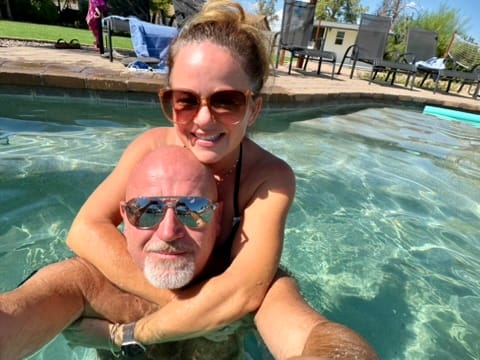
This is Kellie and me in the pool in Phoenix. It looks a little like she’s choking me, but I’m choosing to call it a hug. We were there for a family reunion planned by my in-laws, Annette and Randy. It was such a fun weekend, and we were all grateful for the chance to be together and for everything they did to make it happen.
There’s also a part of the weekend I regret. I had work commitments that overlapped with the family plans. Annette and Randy headed home early, and between their departure and my schedule, I missed seeing them. I got to enjoy the weekend they had made possible without getting to give them a hug and thank them in person.
That bothered me. They put care into bringing everyone together, and I wish I’d had that time with them.
I’m grateful for the weekend, including the time Kellie and I got in that pool. I also wish parts of it had worked out differently. That feels like an honest place to begin a conversation about work and home.
Both sets of commitments mattered. I lead a community health center, and people depend on that work. I take my responsibilities seriously. I’m also a husband and a dad who wants to be present for his family. Those parts of my life occasionally ask for the same hours, and caring deeply about all of them doesn’t create more time.
We had to compromise. Some of that worked well. Some of it meant missing people I wanted to see.
Advice about priorities gets much simpler when you leave out the fact that several people have legitimate reasons to need you. Even after you think it through and make a reasonable plan, there might be something you’re sad to have missed. Understanding why you made a choice doesn’t take away the disappointment.
For me, that was missing Annette and Randy. I wanted to thank them face to face. Their effort gave our family time together, and I don’t want my appreciation to get lost in an explanation of why I was busy.
It makes me think about what we owe the people who adjust their plans around ours.
Kellie deserves a say in time we were expecting to share. If I agree to something and then explain how our plans need to change, I’ve already made part of the decision for her. She might understand completely. I still owe her the opportunity to tell me what the adjustment means to her.
That conversation needs to happen while there is something left to decide. What part of the weekend matters most to each of us? Which commitments require my presence, and where is there flexibility? There might be something she was looking forward to that I hadn’t understood. I need to know that before assuming it would be easy to move.
Being together a long time makes it easy to think you already know the answer. “She won’t mind” starts to feel reliable enough that you stop checking. Someone has been understanding before, and you begin to count on that understanding as you make the next plan.
I want to be careful with that. Kellie’s patience deserves my appreciation and some attention to how often I’m asking for it.
A person saying “I understand” might still be disappointed. We ought to be able to hear that without immediately defending why an obligation matters. They’re telling us about time they wanted with us. That deserves tenderness, especially when there’s very little left to change about the situation.
Fairness also takes a longer view than a single weekend. There will be times when work requires more attention and others when family needs it. An arrangement doesn’t have to divide the hours evenly to feel fair. Both people do need to feel that what matters to them has a place in the decisions.
If the same person keeps adjusting, it’s worth asking whether the arrangement still feels reasonable to them. Their willingness to make something work once doesn’t tell us what they’re willing to keep doing.
Some of the demands on my time are entirely my choice. I write books and make music. I enjoy creating, and there is almost always another idea I’d like to pursue. Those things add meaning to my life. They also use hours that affect the people around me.
I have to be honest about which things are obligations and which things I’m eager to do. Calling everything important makes it difficult to recognize when I’ve volunteered for more than fits. It also makes it harder for the people I love to know where there’s room to ask for something different.
Then there’s what happens with the time we do get.
If we’ve adjusted our plans to be together, I want to give that time my attention. Kellie deserves to feel that I’m glad to be with her. My kids deserve my interest in whatever is happening in their lives, including the ordinary things that won’t sound urgent to anyone else.
A conversation doesn’t always announce that it matters. Someone feels like talking, and you have a chance to listen. If you’re distracted, they might tell you less. You won’t necessarily know what you missed.
That’s part of why I’m grateful for the reunion. Annette and Randy gave everyone a reason to set aside time and come together. We had so much fun. Missing them also made me more aware of the people I want to consider before the calendar fills up.
If you’re looking at a complicated week, try having a conversation before adding another commitment. Ask someone you love, “What part of our time together matters most to you this week?”
Give them room to answer, then explain what you’re trying to work around. Find something you both want to protect and agree on what needs to change to make it possible. It might be a modest amount of time. It still deserves a specific place in the week and shared responsibility for making it happen.
I made a two-page worksheet called Time Together to help with that. It starts with what each person has been missing and what needs their attention. There’s room for both answers before you make a plan, followed by space to work out what each of you is willing to adjust.
Fill it in on screen or print it and sit down together. Leave room for an answer you didn’t expect. My hope is that you finish with time on the calendar and a better understanding of why that time matters to each other.
Annette and Randy, thank you for bringing us together in Phoenix. I wish I’d gotten to put my arms around you and say that in person. We were grateful for the weekend, and I’m glad we have those memories because you made the effort to get us there.
If someone came to mind while you were reading, reach out to them. Thank them for time they’ve made for you, or tell them you’ve been missing them. Forward this with a personal note if it helps you begin.
I still owe Annette and Randy those hugs.
Mike
P.S. This week’s episode of Still Here, Still Trying is “Wherever You Go, There You Are,” a saying from a high school friend that turned into a question about how much say I still have in what it’s like when I show up. Read the essay and watch the episode here.