
Good leadership means noticing how much work people do just to make their own work possible.
There is someone on your team who knows which assignments need a second reminder, which handoffs need checking, and which unanswered questions will become a problem by Friday. They probably do not describe this as a separate responsibility. They simply know that if they stop paying attention, something will get missed.
You may think of that person as dependable. You may regularly tell them how much you appreciate them. You may also keep giving them more work because they always seem to find a way to get it done.
I think leaders need to spend more time looking at what that dependability costs.
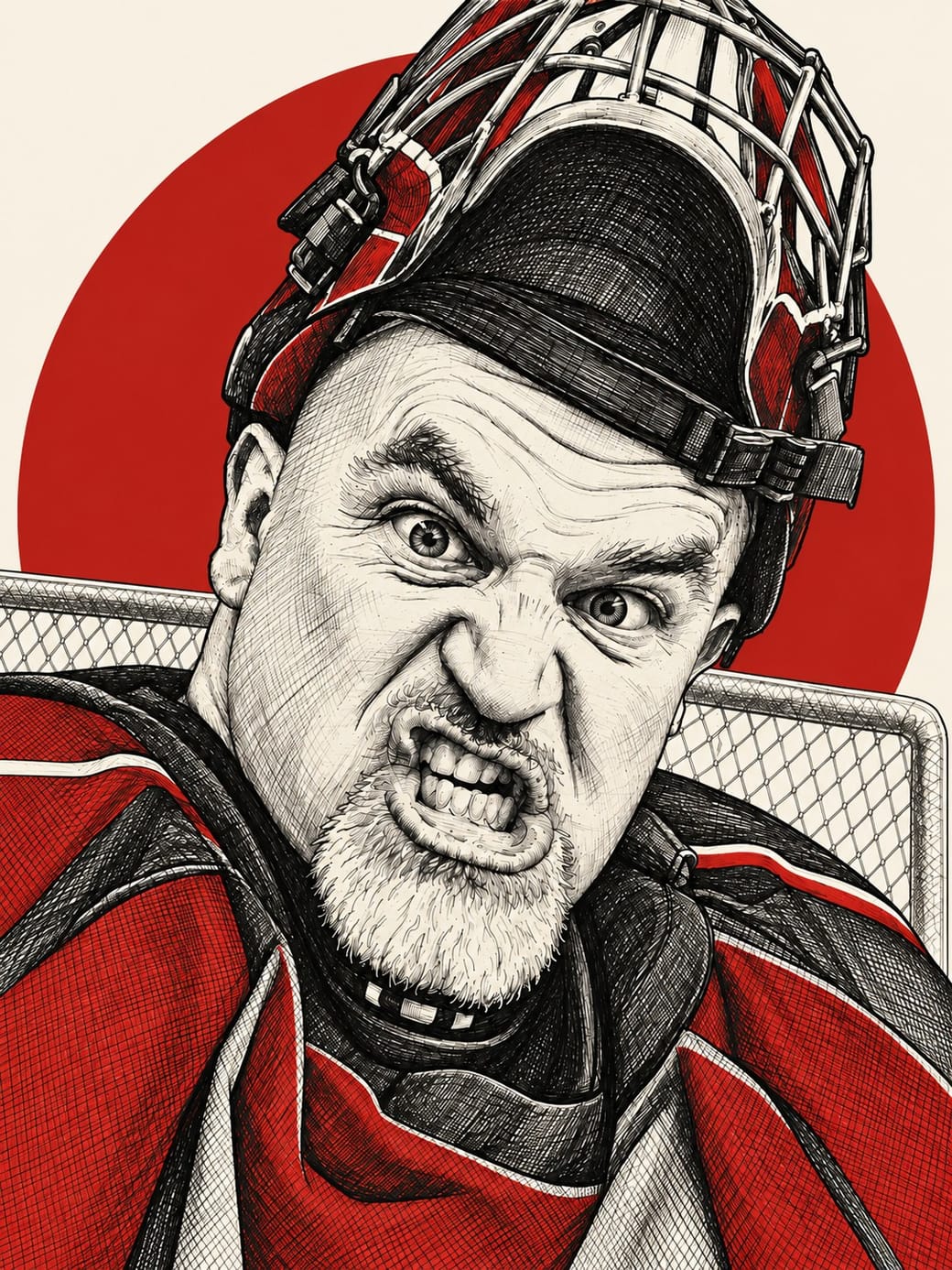
A Sunday in the goalie crease brought this into focus for me. I played four beer-league hockey games with different teams, and one of those games felt remarkably different. I could concentrate on the shot because I trusted someone to cover the extra player and respond to the rebound. I think I only let in two goals. In the other games, there were several more. I remain a mediocre goalie, and four games do not qualify as a scientific study, but I could feel how much more attention I had available when I trusted the people around me.
The other teams were trying too. They had different skills, experience, and familiarity with one another. What interested me was how the same person could work just as hard and have a very different experience of the job.
It left me wondering how often we evaluate people without understanding how much of their effort is going into compensating for everything around them.
The work nobody assigned
Most organizations have a visible version of how work gets done. There are responsibilities, deadlines, meetings, and people attached to each step. Then there is the version people actually live with.
In that version, someone sends the reminder because the deadline alone will not be enough. Someone attends a meeting because they are afraid an important detail will disappear if they are not there to repeat it. Someone checks the handoff, rewrites the instructions, or stays available after their own part is finished because they know there will be questions.
Some coordination is necessary. Working with other people will always require communication and adjustment. The problem develops when the same people repeatedly absorb the same uncertainty, and the organization begins treating their extra effort as the normal way things work.
From the outside, the process looks successful. The deadline was met. The customer received an answer. The project moved forward. From inside the process, one person may have spent most of the week making sure six other things did not fall apart.
That work is easy to overlook because its success leaves so little evidence. The crisis never happened. The missing information arrived before anyone noticed it was missing. The person who caught the problem quietly moved on to the next one.
Then we ask why they are having trouble concentrating on a new assignment.
When being dependable becomes a burden
I understand why leaders rely on the people who consistently follow through. I do it too. When something matters, you naturally turn toward someone you trust. There is nothing wrong with recognizing competence or giving capable people meaningful responsibility.
But there is a point where trust can become an excuse for leaving a broken process alone. We know someone will catch the missed step, so we never fix the handoff. We know someone will stay late, so we avoid an honest conversation about workload. We know someone can sort through an unclear request, so we stop taking enough care with the request itself.
Eventually, being good at your job starts to mean inheriting the consequences of everyone else’s unfinished work.
Praise can make that arrangement harder to question. If a person’s value has become tied to being the one who always handles things, asking for relief may feel like risking the very reputation they worked hard to earn. They may keep accepting more long after the work has stopped being reasonable.
As a leader, I need to be willing to ask whether someone’s apparent capacity is partly the result of effort I have failed to see. When a dependable person looks tired, another conversation about time management may be the wrong place to begin. I may need to understand what the rest of us have allowed them to carry.
Following through gives someone their attention back
This gets personal quickly, because I know my own intentions. I know when I care about something, and I know when I am trying hard. Neither tells me everything I need to know about what it is like to work beside me.
If I agree to handle a task but leave someone wondering whether I remembered, they are still carrying part of it. If I introduce a new idea without explaining what happens to the work already underway, somebody has to sort through the consequences. If I say something is important but never clarify what can wait, I have handed people a priority decision without admitting that I handed it to them.
My enthusiasm can be sincere while the extra work it creates is equally real.
That is why the ordinary details of teamwork matter so much. A realistic commitment, a clear handoff, or an early warning about a delay gives another person useful information. They can make a decision and move on. They do not have to keep checking whether the situation has changed.
Trust grows through those experiences. Over time, people learn that when you take responsibility for something, you will either complete it or tell them what has changed. They can turn their attention elsewhere because they have a reasonable understanding of what to expect from you.
Imagine what that frees up across an entire team. People still work hard. They still help each other. But more of their attention reaches the work itself because less of it is spent wondering whether someone else will follow through.
Lead the people who are actually there
None of this means that individual performance stops mattering. I still have to make the save. If my positioning is poor or I leave a rebound in a terrible spot, I have something to work on. Having support does not remove my responsibility to improve.
The same is true at work. Someone may need coaching, more practice, clearer feedback, or a different assignment. Sometimes a difficult conversation has been avoided for too long. Looking at the environment should help us understand the problem well enough to respond, including when the response requires holding someone accountable.
It should also make us more honest about our own part in the situation. Have we explained the expectation? Have we given people enough time and information? Are we asking them to own decisions and then reversing those decisions without discussion? Have we allowed one person’s repeated failure to follow through to become another person’s permanent responsibility?
Those questions bring us back to the team in front of us. We lead actual people with different abilities, histories, pressures, and ways of understanding the work. They will need different kinds of support. Wishing they were a more experienced or perfectly coordinated group does nothing to help them become one.
What helps is noticing where the work becomes difficult and staying with that problem long enough to improve it. Sometimes that means teaching a skill. Sometimes it means simplifying a process or changing who owns a decision. Sometimes it means admitting that a leader’s own habits have made everyone else’s job harder.
That last one deserves more attention than it usually gets.
A useful place to start this week
Choose one recurring piece of work that always seems to require more effort than it should. Ask the people involved to walk through what actually happens, including the reminders, checking, waiting, and repairs that never appear in the official description.
Listen especially carefully to the person who usually makes it all come together. They may know exactly where the trouble begins. They may also assume everyone already knows, because they have been living with it for so long.
Then change something specific. Give a decision a clear owner. Agree on when someone needs an update. Explain what information must accompany a handoff. Remove a duplicate approval. Address the commitment that repeatedly goes unmet. The improvement should be concrete enough that the people doing the work can tell whether it helped.
And when someone produces a strong result, look around them before deciding who deserves recognition. Notice the person who caught the error early, supplied the missing information, or created enough stability for someone else to concentrate. Those contributions are part of the result too.
I came away from that hockey game proud of how I played and grateful for the people who helped make it possible. I want to bring that same attention to the teams I work with. I want to understand who is quietly covering too much, where we are making one another’s jobs harder, and what I can do to give someone a little more room to perform well.
There may be more ability in the team in front of you than its current results reveal. It is worth finding out how much of that ability is busy holding everything else together.
Hear the story behind the essay
In this week’s episode of Still Here, Still Trying, I get into the four-game Sunday that started this conversation, the difference I felt in the crease, and what it taught me about leadership. Listen on Spotify or watch the full episode on YouTube.
I would love to hear your experience: what does someone on your team do that allows you to stop worrying and focus? Leave a comment on the YouTube episode, or share this essay with the person who came to mind. They may have no idea you noticed.
For more essays like this, subscribe to Just an Ordinary Tuesday at MikeBakerHQ.com. While you are there, explore the books, music, art, and advocacy work. Get lost for a little while.
This episode is supported by my son Jake’s new electrical company, Shaka Electric Co. I am proud of him and grateful for his support.
Still here. Still trying.