Why this book exists
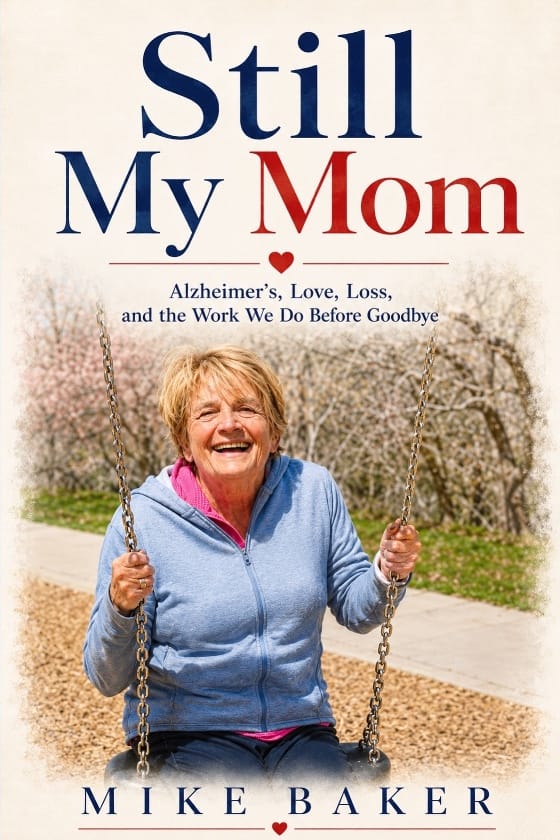
Before Alzheimer’s became the first thing people asked about, my mom had already lived a whole life. She was a wife, mother, grandmother, nurse, kidney transplant coordinator, woman of faith, keeper of cookies, and the person whose front porch made room for long conversations. She had a dimpled chin, a life of service, and people who knew what it felt like to be cared for by her.
The disease became part of our family’s story, but it did not earn the right to become her entire identity. That distinction matters. Alzheimer’s can turn a person into a diagnosis, a safety problem, a medication list, or the latest difficult update. The people who love them have to keep remembering—and helping everyone else remember—that the person was here first.
My dad carried a long goodbye with extraordinary devotion. My brother Jon and sister Jen lived closer to much of the daily work. I lived in Coeur d’Alene and often experienced the disease through calls, visits, distance, guilt, and the knowledge that love does not always divide caregiving evenly. My aunt Cathy, my mom’s lifelong friend and hiking partner, kept finding ways to bring her near trails, dogs, weather, fresh air, and the world she had always loved. She stayed with her through the last breath.
That is one reason this book refuses the clean version of caregiving. Love can be fierce and exhaustion can still be real. A caregiver can feel anger, resentment, fear, tenderness, gratitude, and grief before breakfast. Needing help does not mean the love failed. It means the work became too large for one person to carry safely.
Families also face decisions they would rather postpone: medical wishes, legal authority, money, driving, home safety, care settings, family roles, hospice, funeral preferences, faith, and what dignity should look like when independence changes. Waiting can feel kinder. Often it only means the hardest decisions arrive after the person has less ability to shape them.
The loving work is to talk while their voice is still present. Ask what matters. Put documents in order. Name who will do what. Separate facts from assumptions. Invite qualified medical, legal, financial, and care professionals into the decisions that require them. Planning is not surrender. It is a way of protecting agency before urgency takes over.
Friends have work to do too. Families living with dementia do not need vague offers or a quiet disappearance. They need a meal on Tuesday, a ride at ten, an hour of respite, a call that does not demand an update, and someone willing to remember the person beyond the disease. Specific help is easier to receive than “let me know if you need anything.”
Still My Mom exists for the long middle: after the first signs, after the word arrives, through changing roles and small good days, through hospice and goodbye, and into the life that remains afterward. Alzheimer’s took too much. It did not get to keep everything she gave us.
Alzheimer’s took too much from you, but it did not take what you gave us.
Who it's for
This book is for adult children, spouses, partners, siblings, relatives, friends, and caregivers facing Alzheimer’s or another dementia in someone they love. It is for families near diagnosis, families already deep in daily care, and families trying to make sense of grief that begins before death. It is also for the friend who wants to help without adding one more task to the caregiver’s life.
Who it's not for
This book is not a medical, legal, financial, hospice, or mental-health manual, and it cannot tell a family what treatment, living arrangement, document, or end-of-life decision is right for them. It does not assume one faith, family structure, caregiving capacity, disease course, or definition of a good ending. The personal story and practical prompts are a starting place for clearer conversations with qualified professionals and the people directly involved.
Questions it answers
- How do we keep seeing the whole person after an Alzheimer’s diagnosis?
- Which early changes should a family stop explaining away?
- What should the person still get to choose while their voice is present?
- How do we hold a family meeting before a crisis makes every decision urgent?
- What medical, legal, financial, care, and end-of-life work should begin early?
- How can friends offer specific help instead of disappearing or saying “let me know”?
- What do caregiver anger, guilt, resentment, exhaustion, and grief mean—and what help do they signal?
- How do families recognize when the current home or care plan no longer works?
- How can hospice become a form of care rather than a symbol of giving up?
- What can love, memory, faith, and family still keep after goodbye?
Inside
Part One, Before the Disease Gets the Story, begins with the whole woman before the diagnosis. It moves through the first changes families explain away and the day Alzheimer’s finally has a name, while refusing to let that name erase everything that came before it.
Part Two, The Work While There Is Still Time, centers agency and preparation. It asks what the person still gets to choose, how to hold the family meeting nobody wants, which decisions and documents need attention, and what real friendship looks like when a family’s world is narrowing.
Part Three, Caregiving Changes Everyone, tells the truth about moving roles, unequal proximity, impossible tradeoffs, anger, anticipatory grief, and the small good days that remain. It makes room for both devotion and depletion without turning either into a verdict on the caregiver’s character.
Part Four, The Hard End-of-Life Work, addresses changes in home and care, hospice, dignity, choice, faith, and the hardest questions near the end. It does not offer one correct ending. It asks families to prepare, listen, seek qualified guidance, and protect the person from becoming only a problem to solve.
Part Five, After Goodbye, follows the family into grief and asks what Alzheimer’s did not get to keep. The afterword, bonus planning guide, resources, acknowledgments, and closing pages turn the story outward so readers can do the work sooner and carry the love forward.
Before you start
This book discusses Alzheimer’s disease, dementia, cognitive decline, memory loss, changing capacity, driving and home safety, wandering, falls, swallowing and eating changes, infections, caregiver exhaustion, anger, guilt, resentment, isolation, anticipatory grief, family conflict, medical decisions, legal and financial planning, assisted living and memory care, palliative care, hospice, funeral planning, death, final hours, medical aid in dying, suicide, self-harm, and crisis support. It is personal and educational, not medical, diagnostic, legal, financial, hospice, or mental-health advice. Laws and care options vary by location and change over time; readers should seek qualified, current, state-specific guidance. If someone is in immediate danger or may hurt themselves, contact emergency services; in the United States, call or text 988.
A note from me
My mom was still my mom before the diagnosis, after the diagnosis, when language became harder, when care changed, and when the disease took more than any of us wanted to give. I wrote this because I do not want the hardest years to become the only years people remember.
My dad carried more than most people saw. Jon and Jen carried the reality of living closer. Cathy carried friendship all the way to the last breath. I carried love, distance, gratitude, guilt, and the awareness that families rarely divide this work in a way that feels perfectly equal. The truth is not tidy. It is still worth telling.
I wish every family could have the difficult conversations earlier. Not because preparation makes Alzheimer’s gentle. It does not. Preparation can, however, protect a person’s voice, reduce avoidable conflict, and keep a crisis from making every choice at once.
I also want caregivers to hear this clearly: exhaustion is not evidence that you loved poorly. Anger is not the whole truth about you. Needing respite, skilled care, hospice, or a different plan is not abandonment. Sometimes love changes form because the old form can no longer keep everyone safe.
My hope is that this book helps a family remember the whole person, do the work while there is still time, accept help without apology, and carry forward what the disease could not take.
First edition, 2026 · Published by Mike Baker
Read chapter one free
Still My Mom
Chapter one of Still My Mom is free to read right here on the page. No download, no card, nothing to install. Sign up with your email and the chapter opens on this page. It also puts you on Just an Ordinary Tuesday, my newsletter, and you can leave that anytime.
You’re signed in, so chapter one is open below. Tap the page or use the arrows to turn.
Continue reading
- Still Good. A memoir about identity, grief, belonging, and remaining whole when the structure that shaped your life changes.
- Still Here, Still Trying. Continues the honest work of staying present with love, loss, family, and the life that remains.
- Human First. Returns to dignity, empathy, and the discipline of seeing a person before a label, role, or problem.
Print it, fill it in by hand, keep it somewhere you will actually see it.
The Person Before the DiseaseThe Work While There Is TimeThe Caregiving Load MapThe Dignity CheckWhat the Disease Does Not Keep Download the workbook (PDF) →